Key Takeaways
- Premium sawdust briquettes deliver consistent 6-hour burn time, reducing kitchen refuel interruptions during peak service
- Low ash output (2–4%) cuts post-service cleanup time by up to 40% versus standard lump charcoal
- Smokeless, odorless combustion protects food flavor integrity and improves kitchen air quality for staff
- Biowoodtech’s Malaysian factory-direct model ensures supply consistency and competitive pricing for local F&B operators
- OEM and grade-flexible options let restaurants, caterers, and distributors scale fuel strategy without rebranding friction
What Makes Sawdust Charcoal Briquettes the Smart Fuel Choice for Malaysian Commercial Kitchens?
Sawdust charcoal briquettes offer predictable heat, minimal ash, and zero chemical additives—critical for cost-conscious Malaysian F&B operations. Unlike variable lump charcoal, premium briquettes maintain steady calorific output, reducing fuel waste and staff time spent managing fire. This guide breaks down the operational advantages, grade comparisons, and selection criteria that help kitchen managers choose fuel that supports efficiency, not overhead.
🧾 Quick Comparison: Charcoal Types for Commercial Use
| Fuel Type | Burn Time | Ash Residue | Best For |
| Premium Sawdust Briquettes | 5–7 hours | 2–4% | Satay stalls, BBQ catering, hotel kitchens |
| Standard Lump Charcoal | 2–4 hours | 8–15% | Short-session grilling |
| Low-Grade Briquettes | 3–4 hours | 6–10% | Budget pop-ups |
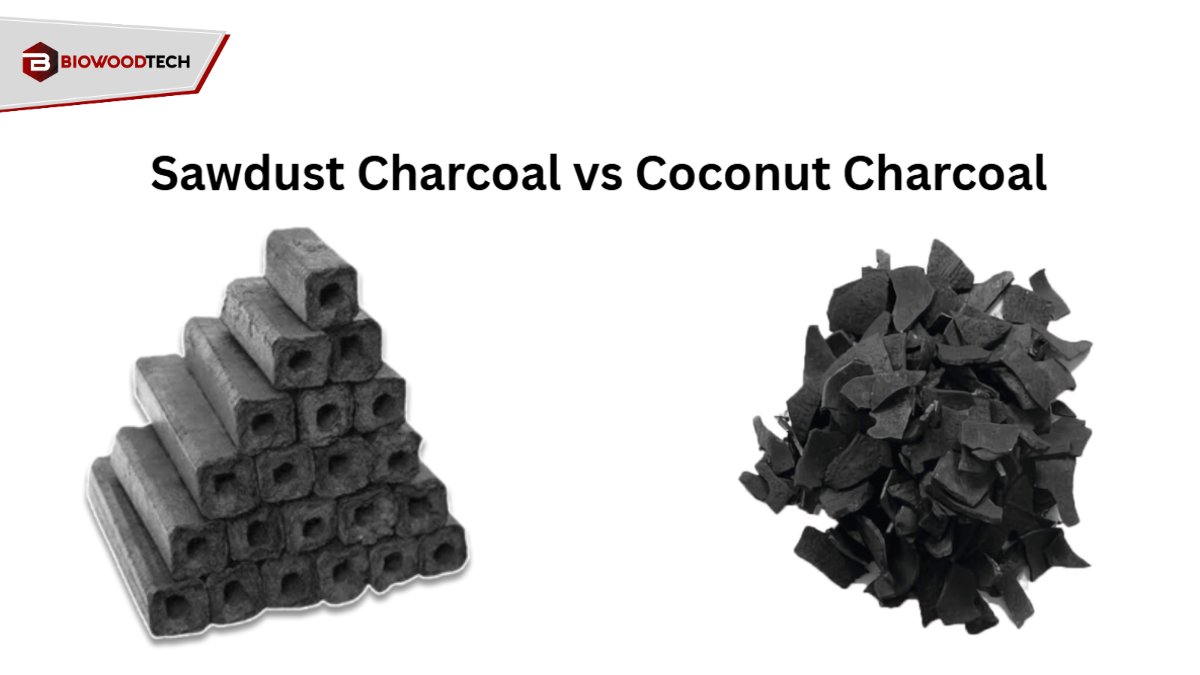
| Coconut Shell Charcoal | 4–5 hours | 3–5% | Premium dining, export kitchens |
*Based on heat-per-ringgit and labor time saved; Malaysian market data 2026
🔥 Why Burn Time Consistency Matters More Than Price Per Bag
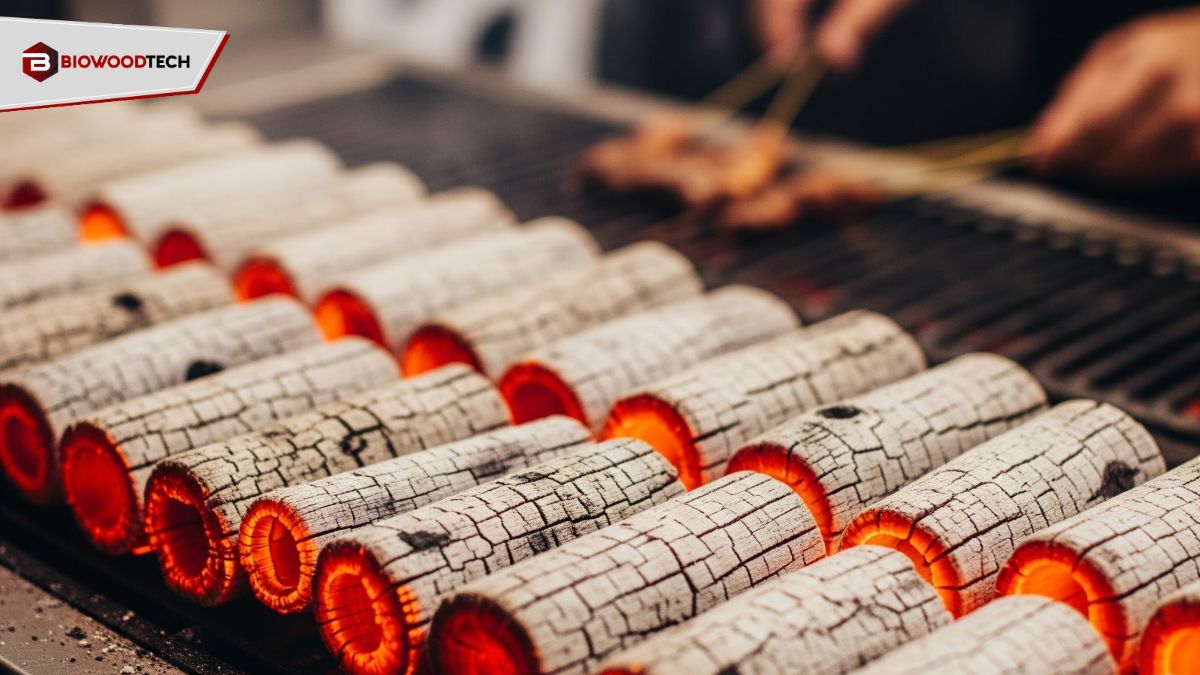
A 6-hour burn cycle means fewer refuels, steadier cooking temps, and less staff distraction during service. For a satay operator running back-to-back dinner shifts, switching fuel every 90 minutes adds up: lost focus, temperature dips, and inconsistent sear. Biowoodtech’s Grade A sawdust briquettes compress dense, dry sawdust at high pressure—no fillers, no accelerants—delivering predictable calorific value (~7,200 kcal/kg) that kitchen teams can plan around.
“We switched to Biowoodtech after tracking fuel use across three outlets. Same heat, half the refuel interruptions. Staff spend time cooking, not tending fire.”
— F&B Operations Manager, Klang Valley catering group
Ideal For: High-volume grilling operations, overnight catering prep, and kitchens where temperature stability impacts food quality.
🌫️ Smokeless Combustion: Protecting Flavor and Kitchen Air Quality
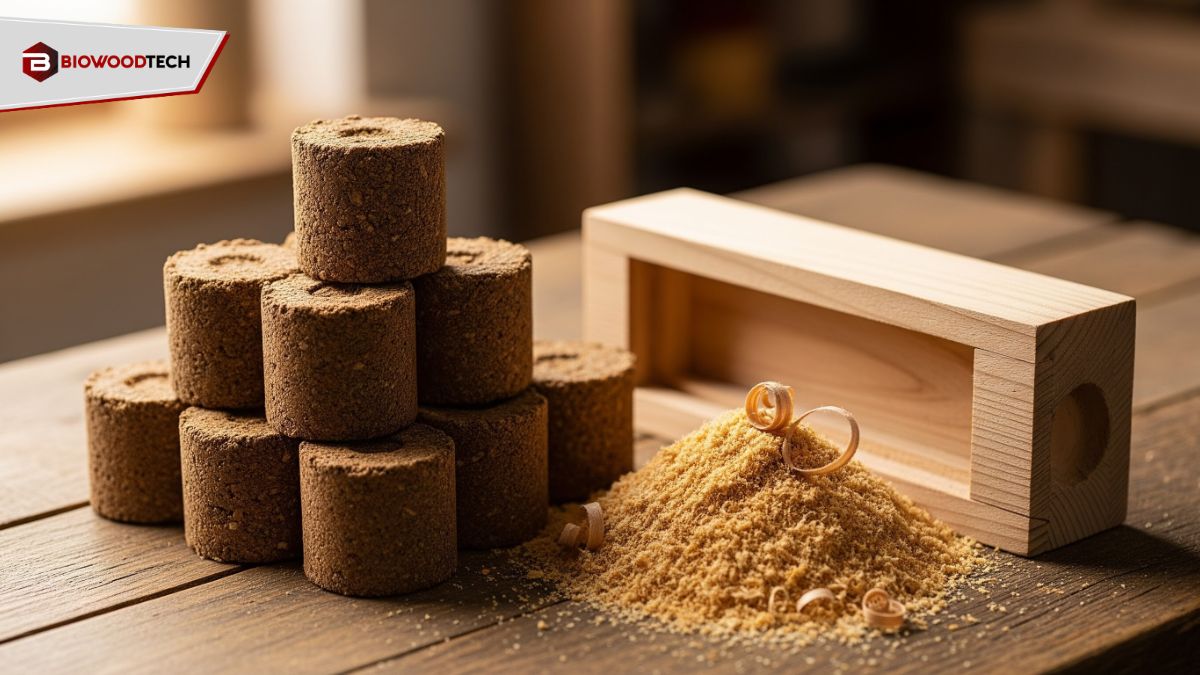
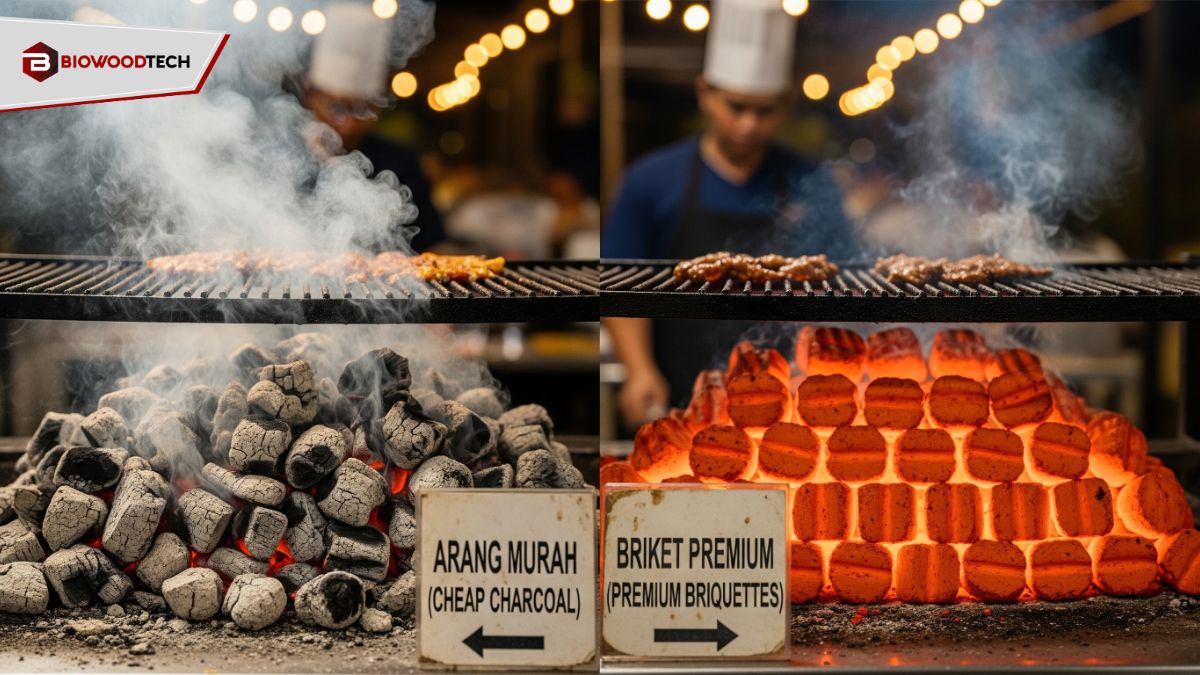
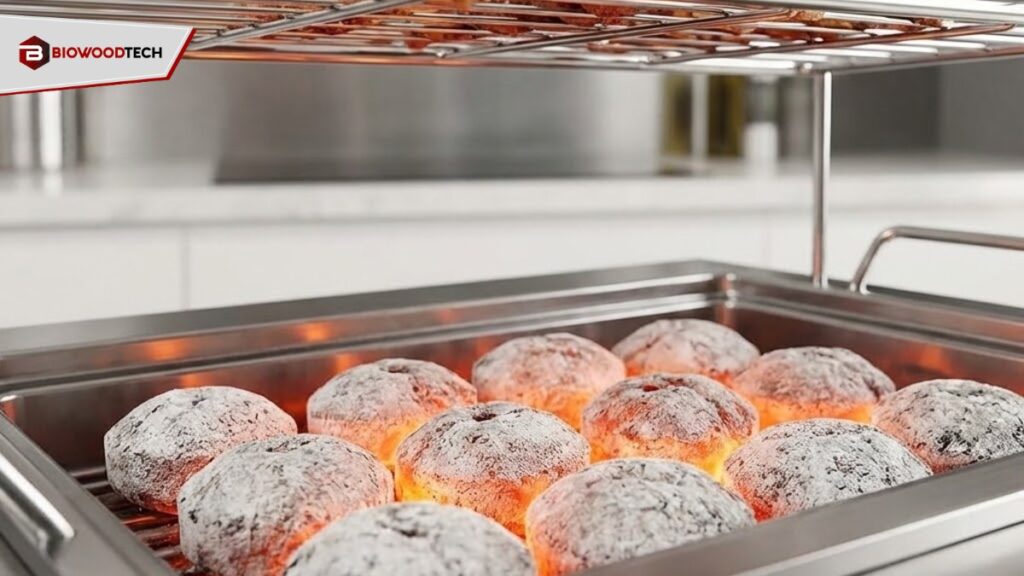
Zero smoke and odorless burn preserve the true taste of grilled items while improving staff working conditions. Traditional charcoal with binders or moisture releases volatile compounds that can impart off-notes to delicate proteins or vegetables. Biowoodtech’s production process carbonizes sawdust in controlled kilns, then compresses without chemical adhesives. The result: clean combustion that meets indoor kitchen ventilation standards and keeps food flavor profiles intact.
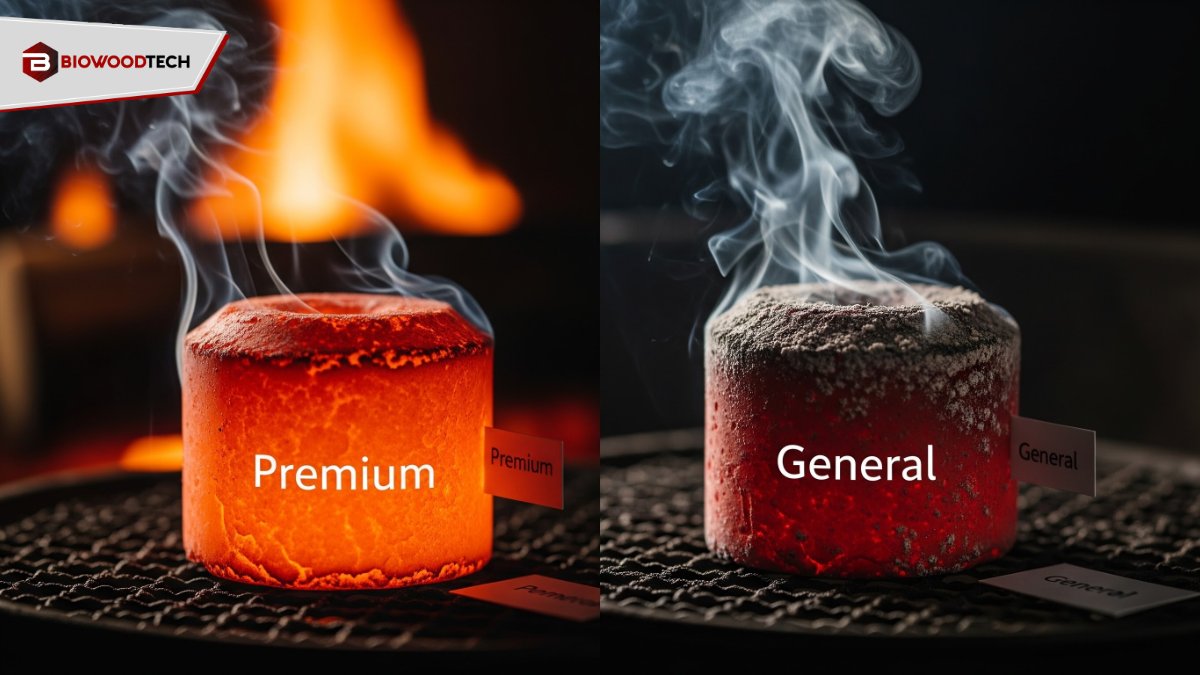
| Metric | Biowoodtech Grade A | Generic Briquette |
| Smoke Emission | None (certified) | Light to moderate |
| Ignition Time | 12–15 mins | 18–25 mins |
| Moisture Content | <8% | 12–18% |
| Ash After 6 Hours | 2–4% | 6–12% |
Location Note: In high-density Malaysian urban kitchens with limited exhaust capacity, low-smoke fuel isn’t just preferable—it’s often a compliance consideration.
🧹 Low Ash Output: Cutting Post-Service Cleanup by Up to 40%
Less ash means faster turnover between services and reduced disposal labor. Ash buildup insulates coals, reducing heat efficiency and requiring more frequent stirring or replacement. Biowoodtech’s tight compression and pure sawdust feedstock minimize inorganic residue. For a mid-size BBQ caterer handling 4–5 events weekly, this translates to ~3–4 hours saved monthly on cleanup alone—time reinvested into prep or client service.
Real-World Scenario: A Penang-based nasi kandar stall using Grade B briquettes reported switching to Grade A reduced ash bin emptying from twice nightly to once, with no change in heat performance.
Key Feature: Ash consistency also supports predictable disposal planning—critical for operations sharing waste collection services.
📦 Grade Flexibility & OEM: Scaling Fuel Strategy Without Rebranding Friction
Biowoodtech offers Grades A–E plus OEM packaging, letting businesses align fuel specs with budget and brand needs. Grade A targets premium dining and export; Grade C balances performance and cost for high-turnover street food; OEM options let distributors private-label without minimum order complexity. This flexibility supports growth: start with sample batches, validate performance, then scale with confidence.
“We needed a reliable local supplier who could match our packaging specs without 6-month lead times. Biowoodtech delivered both.”
— Regional Distributor, Johor
Ideal For: Emerging F&B brands, multi-outlet groups standardizing operations, and exporters requiring consistent fuel documentation.
Read More: Why Sourcing from a Charcoal Factory in Malaysia Beats Trading Companies (2026 Guide)
Still weighing which grade fits your operation? Request a free sample kit with burn-time logs and ash comparison charts—no obligation.
Final Thought: Premium Briquettes Are an Operational Lever, Not Just a Fuel Choice
Choosing consistent, low-maintenance charcoal briquettes directly impacts kitchen efficiency, staff focus, and food quality. For Malaysian F&B operators balancing tight margins and high expectations, Biowoodtech’s sawdust briquettes turn fuel from a variable cost into a controllable advantage.
FAQs About Premium Charcoal Briquettes for Malaysian Kitchens
Premium briquettes use pure, dry sawdust compressed without chemicals, delivering consistent burn time, low ash (2–4%), and zero smoke—critical for flavor integrity and kitchen efficiency.
Grade A briquettes maintain usable heat for 5–7 hours under standard commercial grilling conditions, with stable calorific output (~7,200 kcal/kg).
Yes. Biowoodtech uses recycled sawdust from sustainable timber processing, with carbonization emissions controlled per Malaysian environmental guidelines.
Absolutely. Low ash output (2–4% vs. 8–15% for lump) means less residue to dispose of, cutting post-service cleanup by up to 40% in high-volume settings.
Yes. Biowoodtech supports OEM orders with flexible MOQs, custom labeling, and grade selection—ideal for distributors and multi-outlet F&B groups.