Key Takeaways
- Sustainable kayu arang relies entirely on recycled tropical hardwood sawdust diverted from local furniture factories, preventing unnecessary deforestation.
- High-pressure briquetting machines compress raw sawdust into dense hexagonal logs before carbonisation, completely eliminating the need for chemical binders.
- The carbonisation process requires temperatures exceeding 750°C in controlled kilns to achieve an 81-85% carbon content for smokeless heat.
- Modern facilities install specialized air-controlling systems and wet scrubbers to minimize smoke output and trap harmful emissions during baking.
- OEM services allow distributors to pack up to 27.5 tons of graded sawdust briquette charcoal directly into customized boxes for global export.
How do top charcoal manufacturers in Malaysia transform industrial wood waste into premium export-ready briquettes?
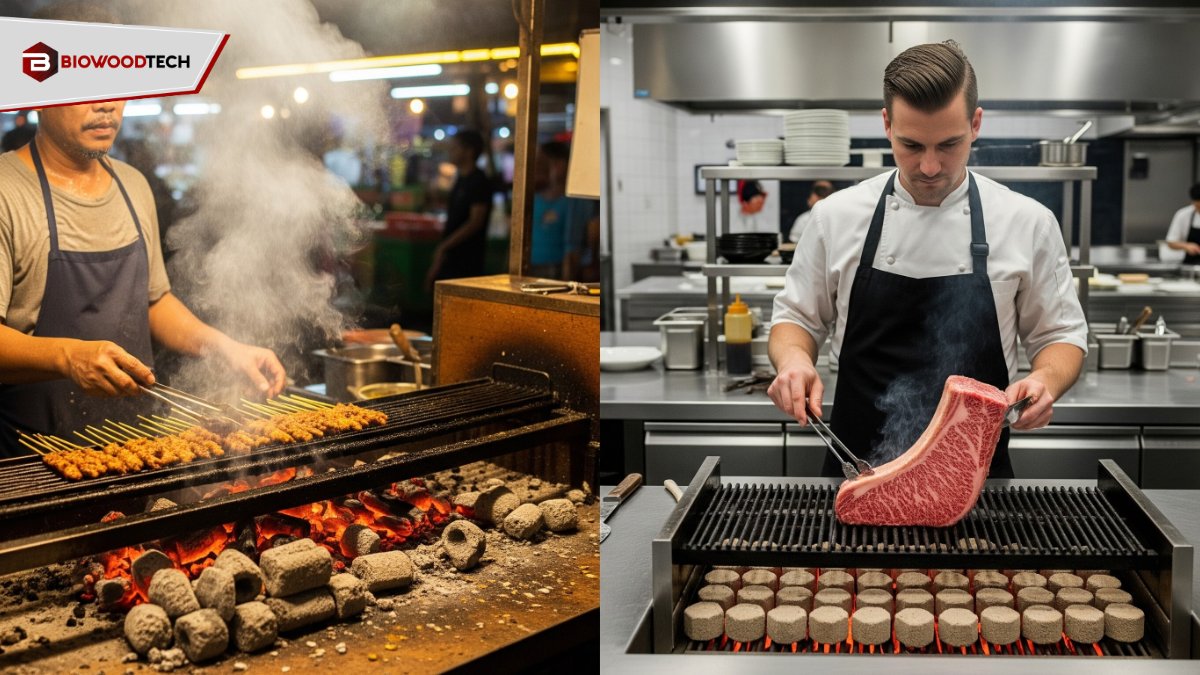
Malaysian facilities collect tropical hardwood sawdust from timber yards, compress it under extreme pressure, and carbonize the dense logs at high temperatures. This creates a smokeless, high-heat fuel source ready for domestic commercial kitchens and international shipping.
Burning raw wood creates thick smoke and uneven heat, frustrating professional chefs and BBQ operators who require absolute temperature control. Understanding this manufacturing cycle helps B2B buyers source reliable, eco-friendly fuel that supports continuous kitchen operations.
🧾 Quick Comparison: Biowoodtech Briquette Grades
| Grade Level | Charcoal Density | Burn Duration | Best Commercial Use |
| Grade A | High (970 kg/m³) | Up to 6 hours | Premium BBQ & long-service restaurant shifts |
| Grade B | Medium | 4 to 5 hours | High-volume daily cooking and catering |
| Grade C | Low (Short pieces) | 2 to 3 hours | Fast, high-heat searing and short cook times |
What Wood Waste Is Legally Used for Kayu Arang?
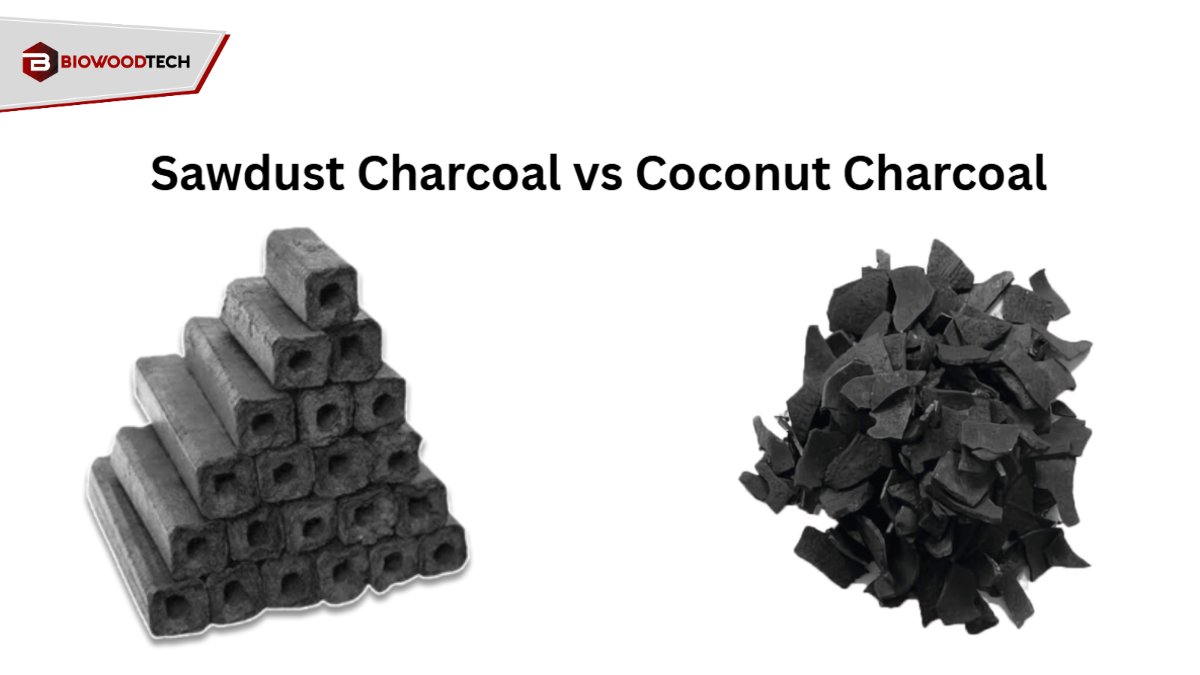
Authentic sawdust briquettes rely exclusively on 100% natural tropical hardwood residues.
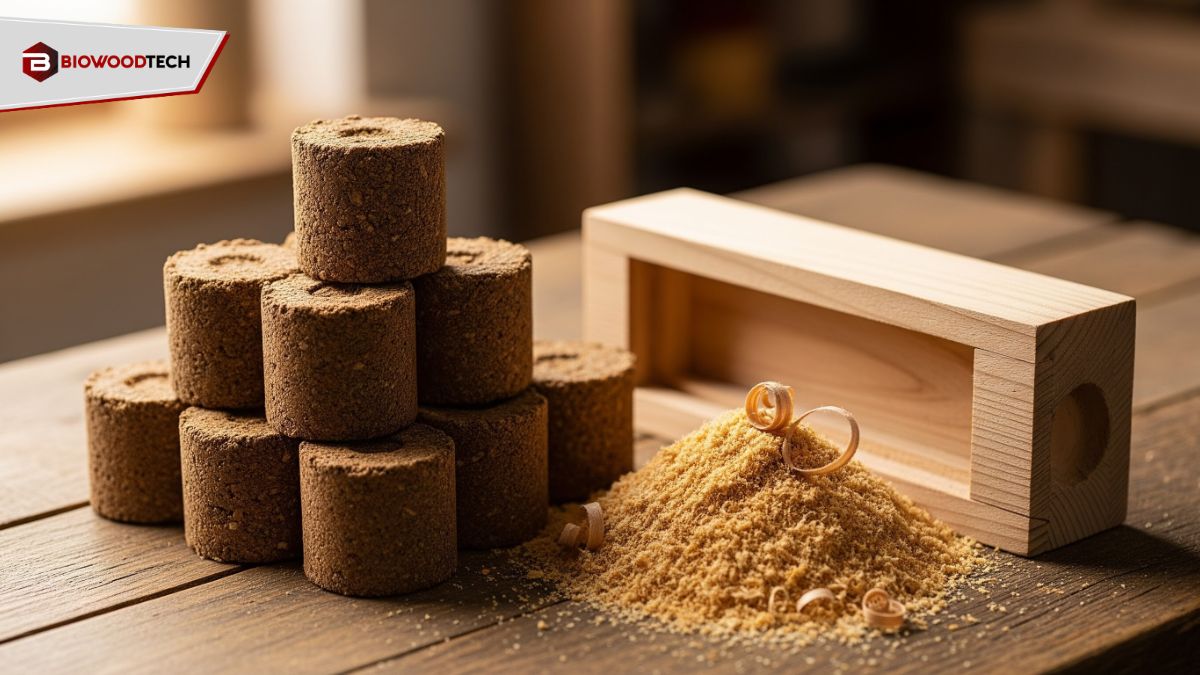
Malaysian timber and furniture industries generate massive amounts of sawdust and wood chips daily. Instead of sending this biomass to landfills, a responsible charcoal manufacturer in Malaysia intercepts the material. This recycling model ensures zero live trees are cut down for production.
By standardizing the input material, factories maintain a consistent moisture content (around 5% to 7%) and an exact calorific value of 7,500 to 7,800 KCAL/kg. Relying on verified tropical hardwood also prevents toxic chemicals from entering the food chain during cooking.
“Using local timber by-products from Kedah allows us to supply high-performance fuel while actively supporting Malaysia’s waste reduction goals.” — Biowoodtech Production Team
How Is Sawdust Briquette Charcoal Malaysia Carbonised?
Raw biomass undergoes high-pressure extrusion before entering the kilns.
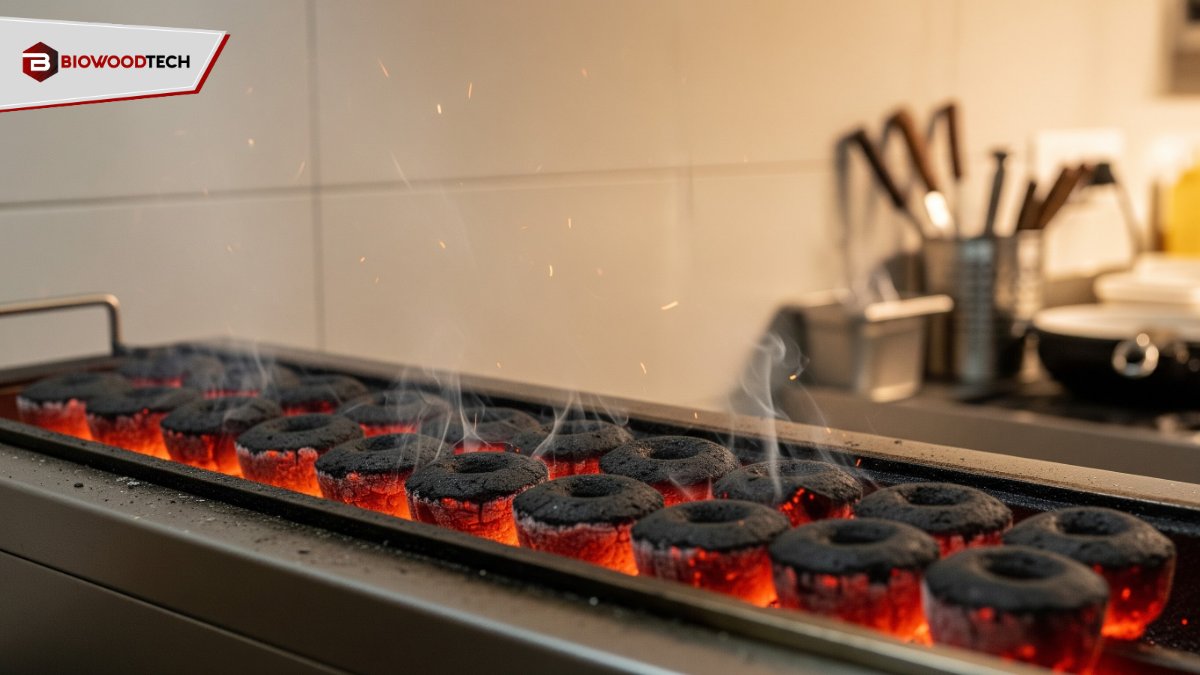
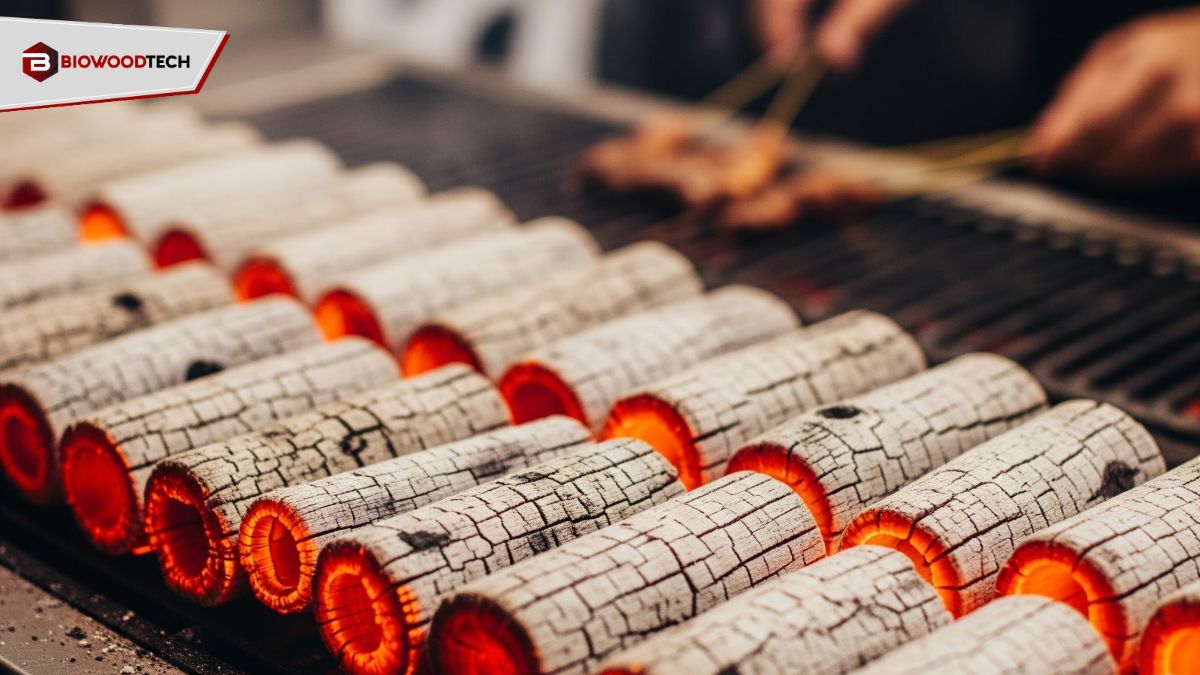
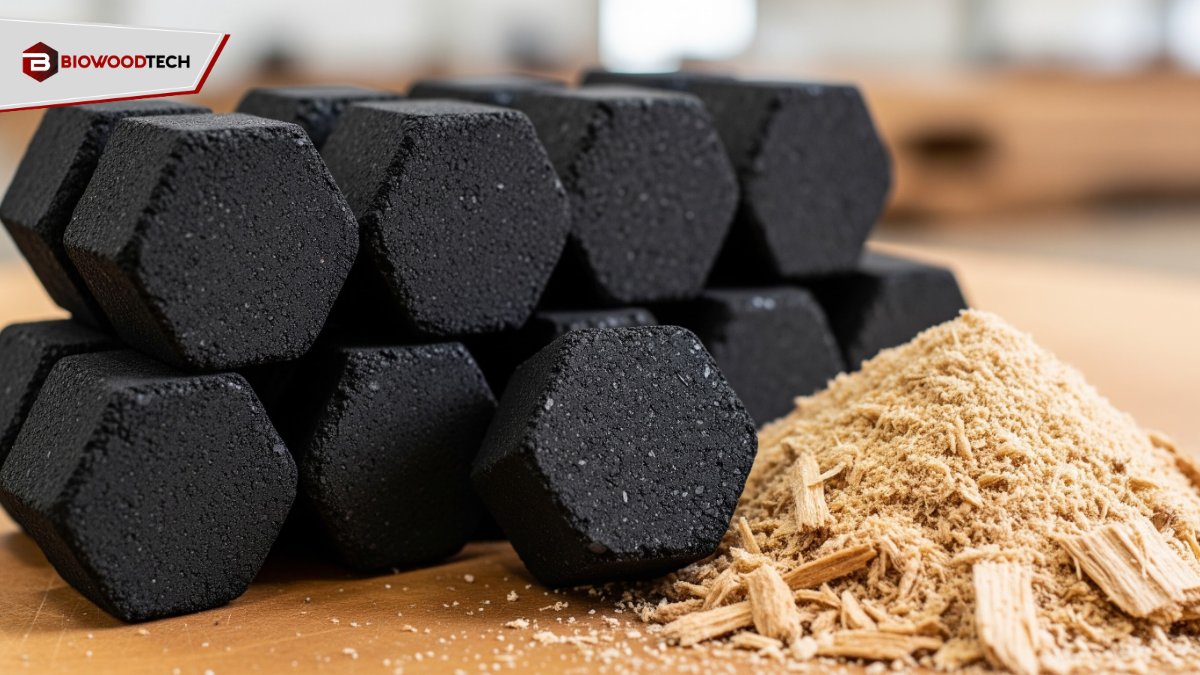
Workers feed the dried sawdust into briquetting machines that apply immense mechanical pressure, forcing the wood’s natural lignin to act as a binding agent. This forms the distinct hexagonal shape with a hollow center, optimizing airflow and eliminating the need for artificial glues.
Once formed, the raw logs enter the carbonisation kilns. Temperatures are carefully raised between 750°C and 800°C in an oxygen-restricted environment. This intense heat drives out impurities, leaving behind a dense carbon structure that burns clean.
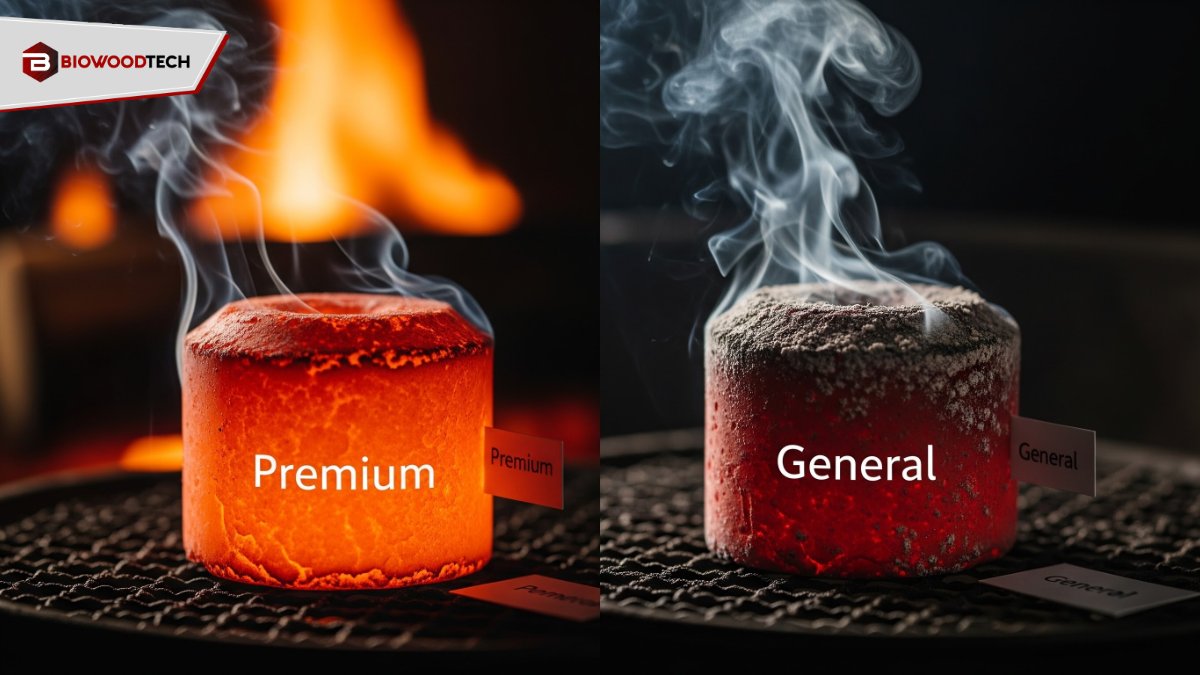
Real-World Application: A standard batch takes several days to properly bake and cool. The resulting sawdust briquette charcoal Malaysia delivers a stable, smokeless burn lasting up to six hours, drastically reducing refuelling disruptions in busy restaurant kitchens.
How Do Charcoal Factories Reduce Emissions During Production?
Modern kilns integrate advanced filtration to trap pollutants before they escape.
Traditional open-pit burning releases heavy particulate matter and volatile gases directly into the atmosphere. To operate sustainably within industrial zones, a professional charcoal factory installs dedicated air pollution-controlling systems.
These systems often utilize wet scrubbers or specialized chimneys that capture tar, pyroligneous acid, and excess smoke during the early stages of carbonisation. Trapping these by-products prevents localized air pollution and protects the surrounding community.
Stat Block: Implementing controlled downdraft reactors or scrubber-integrated kilns can capture up to 90% of harmful particulate emissions compared to outdated traditional earth pits.
Why Choose an OEM Charcoal Factory in Malaysia?
Customized packaging and grading enable brands to scale immediately.
Distributors and retail brands often lack the infrastructure to produce their own fuel. Engaging an OEM partner allows them to select specific product grades (A, B, or C) based on their target market’s price point and required burn duration.
The facility handles the entire process, from carbonisation to packing the finished briquettes into branded 5kg or 10kg boxes. The factory then loads the stock directly into shipping containers, maximizing logistics efficiency for export buyers.
Export Capacity: A fully optimized facility can pack between 25 to 27.5 tons of premium charcoal per shipping container, equating to roughly 2,750 standard 10kg boxes ready for international transit.
Looking to launch your own brand of premium briquettes? Our reliable OEM packaging and stable monthly output make scaling your distribution simple.
Partnering With a Sustainable Charcoal Manufacturer in Malaysia
Securing a consistent supply of premium fuel requires working with a facility that prioritizes quality control and environmental responsibility. By utilizing recycled biomass and controlled carbonisation, buyers receive a superior product that meets strict international cooking standards.
FAQs
Sawdust briquettes offer a higher density, ensuring a smokeless, consistent burn for up to six hours. They leave behind only 2% to 4% ash, significantly reducing kitchen clean-up time.
The hollow center increases the surface area exposed to oxygen. This design helps the charcoal ignite faster and burn evenly from both the inside and outside.
The entire process, from drying the wood waste and extruding the briquettes to the final high-temperature carbonisation and cooling phases, typically takes several days to complete safely.
No. High-pressure extrusion machines use the natural lignin found in tropical hardwood sawdust to bind the particles together, ensuring a completely natural, chemical-free final product.
Yes. Export-focused factories provide end-to-end OEM services, allowing international buyers to print their own logos on custom packaging and ship up to 27.5 tons per container.
Grade A features high-density, long pieces ideal for six-hour restaurant shifts. Grade C consists of shorter, lower-density pieces that ignite quickly, perfect for fast, high-heat searing.