Key Takeaways
- Natural labels are tricky: Even “100% natural” briquettes require binders like cassava starch to hold their shape.
- White ash isn’t proof: While minerals cause white ash, cheap limestone fillers can mimic this “quality” signal perfectly.
- Charcoal is a sponge: It doesn’t rot, but moisture absorption ruins ignition and causes dangerous popping.
- Smokeless physics: True smokeless charcoal relies on high-temp carbonization (>700°C), not just chemical additives.
- Density wins: Sawdust charcoal briquettes often outperform lump charcoal in burn time due to uniform compression.
Marketing labels often contradict chemical reality. “Natural” briquettes still contain binders, white ash can indicate limestone fillers rather than purity, and charcoal’s hygroscopic nature means it can effectively “expire” if exposed to humidity.
You spent good money on that “premium” bag, yet your grill is smoking like a chimney and the heat is dying after forty minutes.
The problem isn’t your grilling technique; it’s likely the fuel. The charcoal industry is rife with unregulated terms like “pure” and “natural” that mask the physics of combustion.
This breakdown separates the marketing fluff from the lab data, ensuring you get the heat you paid for.
1. Does “Natural” Charcoal Mean No Binders?
Physics dictates that loose carbon dust cannot hold a shape without an adhesive agent.
If you are buying briquettes, you are buying a binder. It is physically impossible to compress carbonized wood dust into a solid, durable pillow shape without something to make it stick. When a bag claims “100% Natural,” it usually refers to the type of binder used, not the absence of one.
High-quality manufacturers use organic binders like cassava starch or cornstarch, which burn away cleanly. However, cheaper alternatives often use low-grade vegetable gums or even clay. Lab tests on binding agents show that while starch-based binders offer long burn times (up to 146 mins), clay binders significantly increase ash residue and lower heat output.
Lab Fact: Research on briquette composition indicates that starch binders produce roughly 20g of ash, whereas clay binders can leave behind over 48g of ash for the same volume, clogging your grill’s airflow.
2. Can Charcoal Expire?
Charcoal is technically a rock, but it functions like a moisture sponge.
Ideally, carbon does not degrade. However, charcoal is hygroscopic, meaning it aggressively absorbs moisture from the air. In high-humidity environments (like a backyard shed in summer), your charcoal is slowly drinking water.
“Expired” charcoal isn’t rotten; it is wet. When you try to light damp charcoal, the heat energy is wasted evaporating the trapped water before combustion can occur. This leads to hard starts, heavy white steam (often mistaken for smoke), and dangerous “popping” where expanding steam shatters the briquette.
Pro Tip: Perform the “Squeeze Test.” If a briquette crumbles easily or feels cold and damp to the touch, its moisture content is too high for a consistent burn.
3. Does White Ash Mean Better Quality?
White ash proves the presence of minerals, specifically calcium, not necessarily purity.
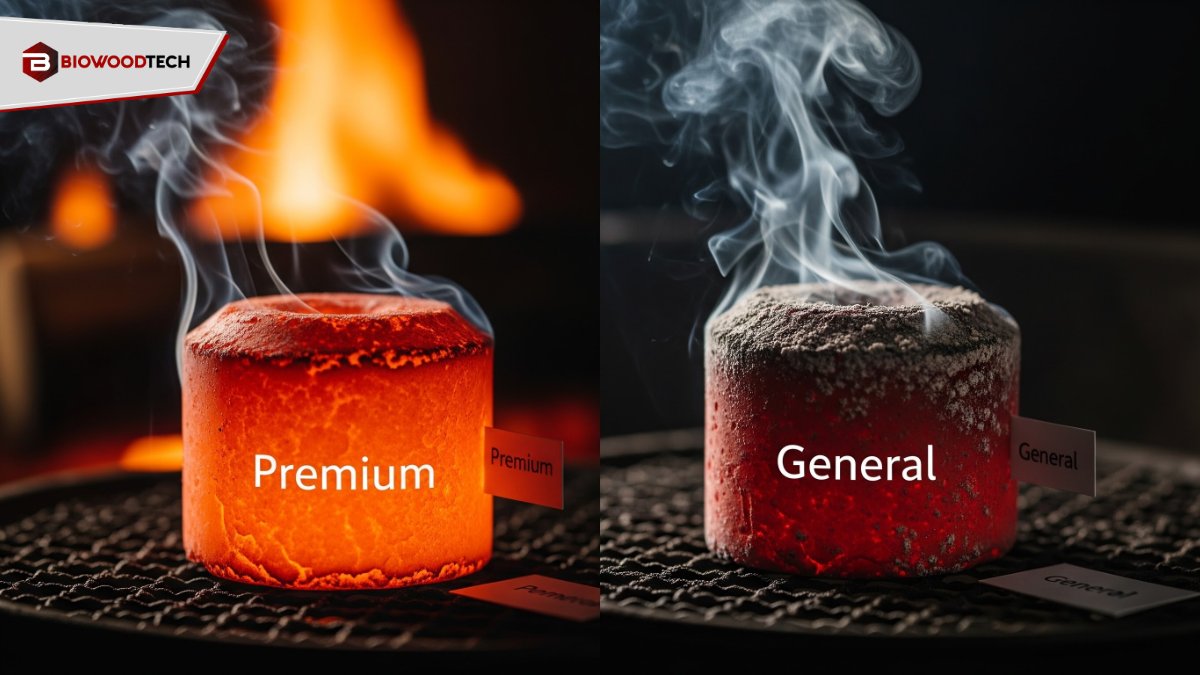
The “White Ash = Premium” myth is one of the most pervasive in the BBQ world. In reality, the color of the ash is determined by the mineral content of the wood—specifically calcium and magnesium carbonates. When carbon burns off, these white minerals remain.
While high-quality hardwoods often produce white ash, manufacturers know this consumer bias. Many low-end brands add limestone (calcium carbonate) or lime wash to their mix. This filler creates a bright white ash but contributes zero heat flavor, effectively diluting your fuel source.
The Reality: A grey or brownish ash can actually indicate a purer carbon product with fewer mineral impurities. Don’t judge the fuel solely by the color of its waste.
4. Is Smokeless Charcoal Actually Chemical-Free?
Smokelessness is a result of carbonization temperature, not chemical additives.
Many buyers assume smokeless charcoal is a chemical product. Ironically, it is usually the most processed “natural” product available. Smoke consists of volatiles—tars, methane, and hydrogen—that didn’t burn off during the initial charcoal-making process.
To create true smokeless fuel, the wood must be carbonized at extremely high temperatures (often exceeding 700°C – 800°C). This drives out nearly all volatile organic compounds (VOCs). If your charcoal smokes, it was likely carbonized at a lower temperature (300°C – 400°C), leaving tarry residues inside the pores that reignite on your grill.
Data Point: High-temp carbonization increases fixed carbon content to over 85%, drastically reducing volatile matter (smoke) to less than 10%, compared to standard charcoal which retains 20-30% volatiles.
5. Is Lump Charcoal Always Superior to Sawdust Briquettes?
Density and consistency often make sawdust briquettes the superior engineering choice.
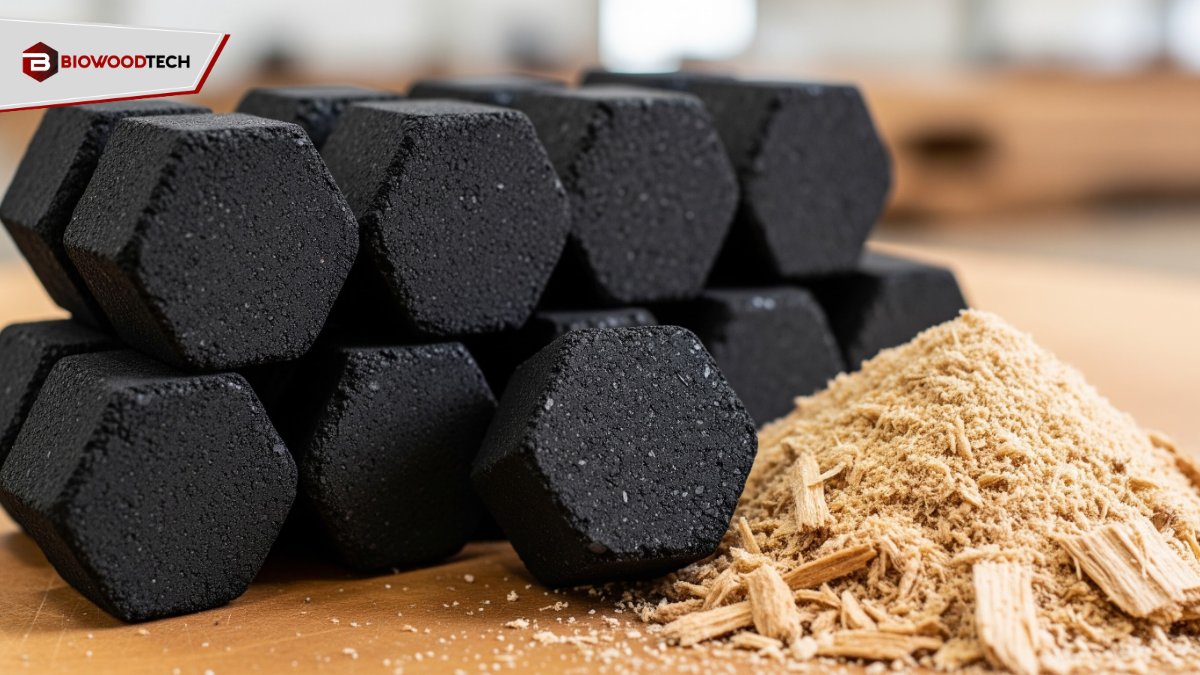
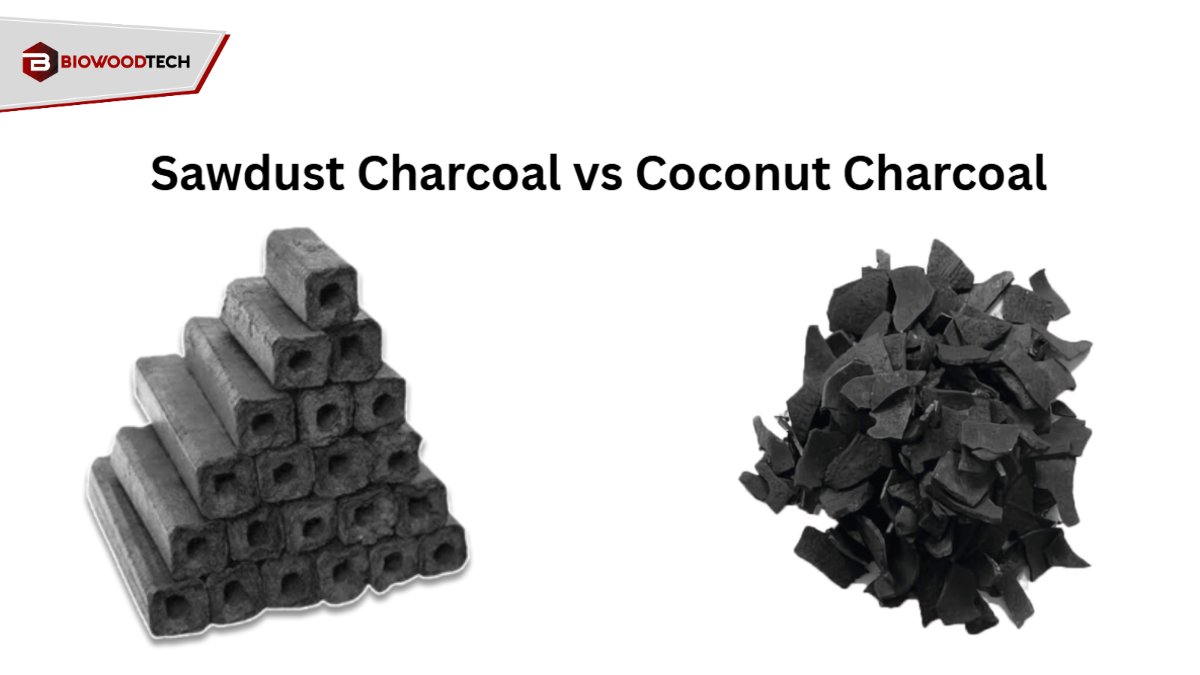
Lump charcoal is romanticized for its irregularity, but that is also its weakness. A bag of lump contains everything from fist-sized chunks to unusable dust. Sawdust charcoal—specifically high-density hexagonal briquettes—solves this through compression.
By compressing sawdust at high pressure (often without binders if using the wood’s natural lignin, or minimal starch), manufacturers create a fuel source with a density twice that of standard wood. This density translates to a longer, more stable burn time that doesn’t require constant refueling.
Comparison:
- Lump Charcoal: Irregular heat, faster burn, high airflow.
- Sawdust Charcoal: High density, uniform heat, 4+ hours burn time.
Still struggling to get that perfect sear? Understanding your fuel source is half the battle. If you want to dive deeper into how different fuel shapes impact your cooking, check out our guide on the Difference Between Charcoal Briquettes vs Lump Charcoal.
Conclusion: The Chemistry of Better BBQ
Stop buying fuel based on the adjectives on the front of the bag. Look for high fixed carbon content, check for starch-based binders, and understand that moisture is the enemy of high heat. Whether you choose lump or high-density sawdust briquettes, success comes from dry, high-carbon fuel, not marketing myths.
Frequently Asked Questions (FAQ)
Cassava starch or cornstarch are the best binders. They are organic, odorless, and burn away cleanly without blocking airflow. Avoid briquettes using clay or lime, as these increase ash production and lower the total heat output.
Popping is caused by trapped moisture expanding rapidly into steam. This usually means your charcoal has absorbed humidity from the air. Store your fuel in a sealed, waterproof container to prevent this.
Not necessarily chemicals, but potentially fillers. While calcium in wood naturally creates white ash, cheap brands may add limestone to mimic this look. Extremely white ash in budget briquettes is often a sign of calcium carbonate fillers.
Check the Fixed Carbon content (should be >75%) and Ash Content (should be <5%). High fixed carbon ensures high heat and low smoke, while low ash means you aren’t paying for filler material that doesn’t burn.
Yes. “Smokeless” only means it does not release visible smoke (particulates and tars). All burning carbon consumes oxygen and releases Carbon Monoxide (CO), so it must always be used in a well-ventilated area.
“White charcoal” (Binchotan) is carbonized at a much higher temperature (approx 1000°C) and cooled rapidly with ash, making it extremely hard and metallic-sounding. Black charcoal is carbonized at lower temps and is softer.