Key Takeaways
- Shape dictates airflow: Hexagonal briquettes with central holes burn hotter (over 1000°C) and cleaner than pillow shapes.
- Material matters: Sawdust briquettes offer longer burn times (4–6 hours) compared to standard lump charcoal.
- Restaurant grade is distinct: Professional kitchens require high-density logs that don’t need frequent topping up during service.
- OEM customization: Brands can select specific density grades (A, B, or C) to balance cost vs. burn duration for their market.
- Sustainability factor: Top-tier briquettes utilize waste sawdust or coconut shells, preventing new tree felling.
What Are the Best Charcoal Briquettes for Your Needs?
The best charcoal briquettes depend entirely on your airflow and duration needs.
For home BBQs, pillow-shaped briquettes offer easy handling and moderate heat.
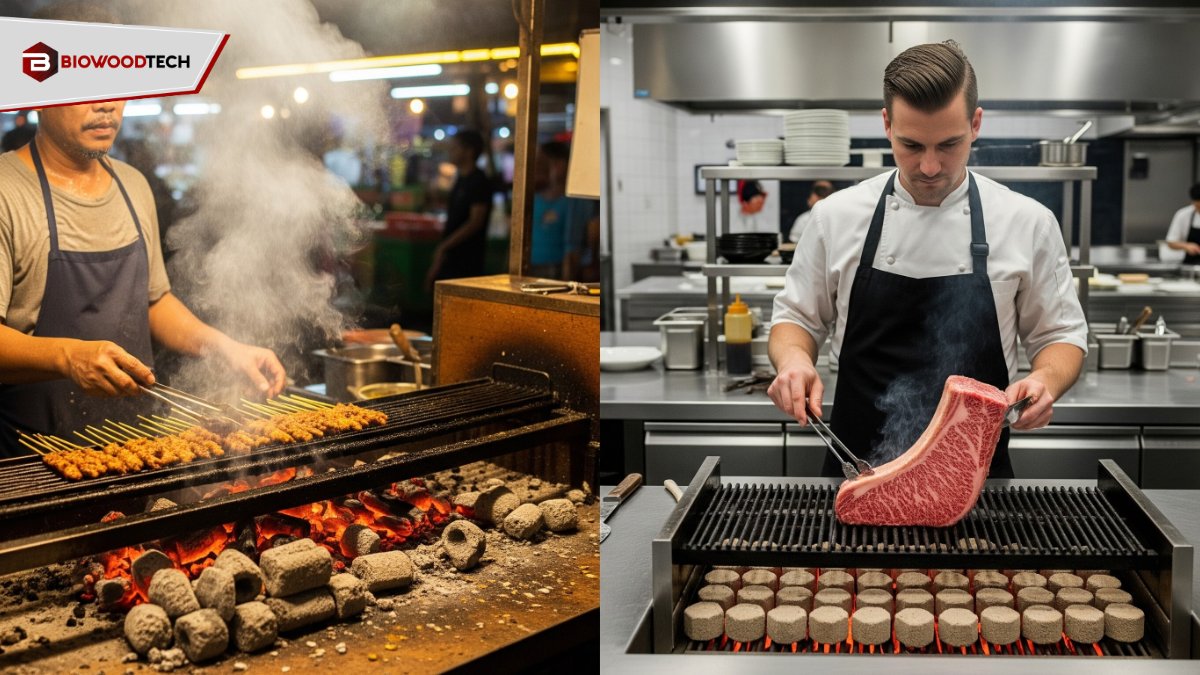
For restaurants and long cooks, high-density hexagonal sawdust briquettes are superior, providing 4+ hours of consistent heat over 800°C with minimal smoke.
For OEM buyers must choose grades based on these end-user performance metrics.
You wouldn’t put diesel in a Ferrari, so why fuel a premium Wagyu steak or a slow-roasted lamb with gas station charcoal that burns out in 45 minutes?
Whether you are a backyard pitmaster, a head chef running a frantic dinner service, or a brand looking to import the perfect fuel, the “black gold” you choose dictates the quality of the final dish.
This guide breaks down the physics of briquette shapes, the truth about “restaurant grade,” and how OEM specifications translate to real-world grilling performance.
🧾 Charcoal Comparison Table: The 3 Main Contenders
| Feature | Sawdust Briquettes (Hexagon) | Coconut Shell Briquettes | Lump Charcoal (Natural) |
| Best For | Restaurants, Low & Slow, OEM Brands | Shisha, Yakitori, Table Grills | High-Heat Searing, Steaks |
| Burn Time | ⭐⭐⭐⭐⭐ (4–6 Hours) | ⭐⭐⭐⭐ (3–4 Hours) | ⭐⭐ (1–2 Hours) |
| Heat Consistency | Extremely Stable | Stable | Variable / Spikes |
| Ash Content | Low (~2-4%) | Very Low (<2.5%) | Medium to High |
| Price Point | Mid to High | Mid | Variable |
| Key Advantage | Zero smoke, high heat, long life | Cleanest burn, neutral scent | Authentic wood smoke flavor |
How Do Charcoal Briquettes Work? (By Shape & Use Case)
1. Hexagonal Sawdust Briquettes (Restaurant Grade)
The gold standard for professional kitchens and serious home pitmasters.
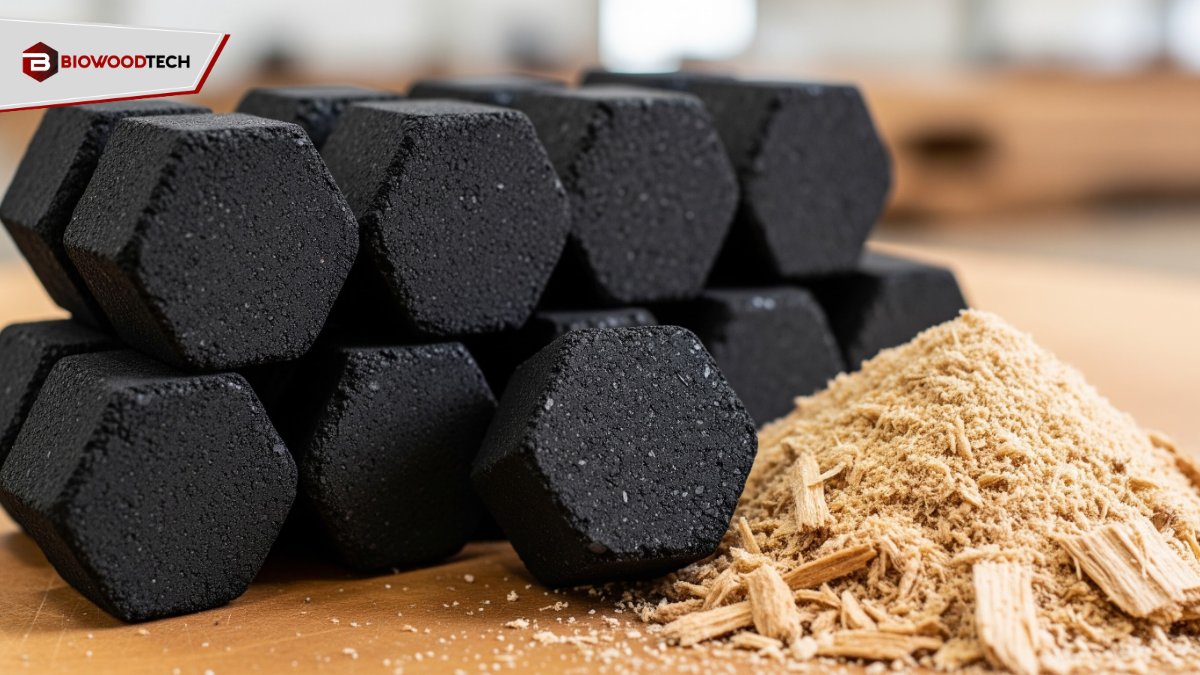
Hexagonal briquettes are engineered for performance. Unlike random lump shapes, these are machine-pressed from hardwood sawdust at extreme pressure. The defining feature is the central hole (often called a “flue”), which acts as a natural chimney. This promotes internal airflow, allowing the log to burn evenly from the inside out and the outside in simultaneously.
Chef’s Insight: “In a commercial kitchen, we can’t pause service to refill the charcoal. We need a log that hits 800°C and stays there for 5 hours. That is why we use hexagonal sawdust logs.”
Ideal For:
- Restaurants & Hotels: Yakitori grills, tandoors, and open pit roasting.
- OEM Brands: Creating a “Pro-Series” product line.
- Use Case: Slow-roasting large cuts (brisket, lamb leg) or high-volume satay stations.
- Specs: Typically 40cm lengths, carbonized at high temps to remove volatiles (smoke/odor).
2. Pillow-Shaped Briquettes (Standard Home BBQ)
The convenient, classic choice for casual backyard grilling.
Recognizable by their small, cushion-like shape, these are the most common form of consumer charcoal. They are designed for ease of handling—you can pour them from a bag and arrange them easily with tongs. However, they often contain binders (like starch) to hold their shape, which can produce more ash and a slight chemical smell upon lighting if not sourced from a premium supplier.
Ideal For:
- Home Users: Weekend burgers, sausages, and corn.
- Retailers: Supermarkets and convenience stores.
- Use Case: Short cooks (under 2 hours) where ease of lighting is priority over duration.
- Note: Lower density means they burn faster than hexagonal logs.
🏭 OEM Charcoal Guide: Manufacturing Custom Shapes
If you are a distributor or brand owner, understanding the manufacturing process is critical to ordering the right product. Briquettes charcoal manufacturing is not one-size-fits-all; it involves precise control over density and carbonization.
Grade Selection & Market Fit
Choose your grade based on your target audience’s price sensitivity vs. performance needs.
When ordering sawdust briquette charcoal for a private label, you typically select from three grades.
✅ Grade A (Premium Export)
- Target Audience: High-end steakhouses, export markets (Korea, Japan, Middle East).
- Performance: 5–6 hours burn time, zero sparks, perfectly straight logs.
- Physics: Highest density compression; produces the white ash layer chefs love.
✅ Grade B (Commercial Standard)
- Target Audience: High-volume hawker stalls, busy satay vendors, mid-range retail packs.
- Performance: 3–4 hours burn time.
- Difference: Slightly lower density or irregular lengths (3–10 inches), making it cost-effective for daily bulk use.
✅ Grade C (Economy/Industrial)
- Target Audience: Industrial heating, mass-market budget retail.
- Performance: 2–3 hours burn time.
- Difference: Utilizing the ends and smaller breakage pieces; same material, just less aesthetic.
For a deeper dive into the technical specifications and what a premium B2B buyer should look for, read our guide on High-Quality Charcoal: 7 Quality Markers B2B Buyers Miss.
🧩 Visual Guide to Briquette Specs (Card Style)
High-Density Sawdust Logs
Engineered for maximum heat retention and minimal smoke.
These logs are extruded under massive pressure, making them sound metallic (like ceramic) when struck together.
- Price Range: $$-$$$
- Ideal For: F&B Operators & Export Brands
- Key Features:
- Central air-flue for combustion efficiency
- No chemical binders (held together by lignin plasticization)
- Reusable (can be extinguished and relit)
- Location Context: Widely manufactured in Southeast Asia (Malaysia/Vietnam) due to abundant hardwood sawdust resources.
- Expert Stat: “One 10kg box of high-density briquettes often provides the same cooking duration as 15-18kg of standard lump charcoal.”
Coconut Shell Cubes
The eco-friendly champion for compact grilling.
Made from carbonized coconut shells, these are incredibly dense and burn with a neutral scent, making them perfect for delicate meats or indoor table grills.
- Price Range: $$
- Ideal For: Shisha (Hookah) & Yakitori
- Key Features:
- Cube or hexagonal finger shapes
- Extremely low ash content
- Does not spark (safety for indoor use)
- Sustainability: 100% byproduct utilization; no trees cut.
Conclusion: Fueling Your Fire Correctly
Whether you are searing a steak at home or sourcing a 40-foot container for your retail brand, the rule remains the same: density equals duration. Moving from generic lump charcoal to specialized restaurant grade charcoal briquettes isn’t just an upgrade—it’s a change in how you cook. It gives you predictable heat, lower long-term costs, and a flavor profile that lets the food speak for itself.
FAQs On Briquettes & Shapes
Lump charcoal is natural wood burnt into carbon; it lights fast but burns unevenly. Briquettes are compressed sawdust or shell; they take longer to light but provide stable, consistent heat for hours.
The hole increases the surface area and allows oxygen to flow through the center of the log. This creates a “chimney effect,” ensuring the briquette burns evenly from the inside and outside, generating higher temperatures.
Yes, high-quality OEM charcoal shapes made from sawdust use high pressure to bind the wood’s natural lignin. No chemical glues or accelerants are used, making them safe and odorless.
Because they are dense, they are harder to light than cheap briquettes. Use a chimney starter or a gas torch. Do not use lighter fluid, as the dense charcoal will absorb the chemical taste.
Yes. If you have finished cooking but the log is still large, extinguish it by cutting off the oxygen (close the vents) or dipping it in water. Dry it out, and it can be relit for your next BBQ.
Hexagonal briquettes or high-density coconut charcoal are best. They provide the stable, low-fluctuation heat required for 12-hour smoking sessions without needing constant refueling.