Key Takeaways
- Malaysia remains a trusted charcoal export source due to consistent quality, stable supply chains, and long-standing buyer relationships
- Japan, China, and Middle East markets import Malaysian charcoal for different performance and packaging requirements
- Export success depends as much on compliance and shipping readiness as on production quality
- Charcoal exports now face stricter safety and documentation checks due to IMDG Code rules for self-heating cargo (Class 4.2, UN 1361 CARBON)
- Manufacturers who understand buyer specifications and logistics expectations outperform price-only suppliers
Malaysia remains a preferred charcoal export source for markets that require consistent quality, clear documentation, and dependable international shipment, rather than price-driven, high-risk supply.
Malaysia sits in an interesting position in the global charcoal trade. It is not the cheapest producer, and it is not the largest by volume. Yet it continues to supply demanding markets that prioritise consistency, safety, and reliability over raw price.
Today, the leading charcoal manufacturer in Malaysia will explain how our guide country fits into global charcoal demand, why certain countries keep sourcing from here, and what separates export-ready manufacturers from everyone else.
Let’s begin.
How does global demand for charcoal actually work?
In international trade, charcoal is classified under HS Code 4402, which covers wood charcoal regardless of country of origin.
Buyers do not search for “Malaysian charcoal” first. They search for charcoal that meets:
- Performance requirement
- Packaging format
- Regulatory threshold
This is why the charcoal trade behaves differently from commodities like coal or timber.
Charcoal is a functional fuel, and demand is segmented by how it is used.
“The global charcoal market was valued at approximately USD 5.64 billion in 2024 and is forecast to grow to about USD 7.84 billion by 2029, a compound annual growth rate of around 7.2%.” – The Business Research Company, Charcoal Global Market Report 2025
Food service and restaurant demand
This segment prioritises burn performance and repeatability.
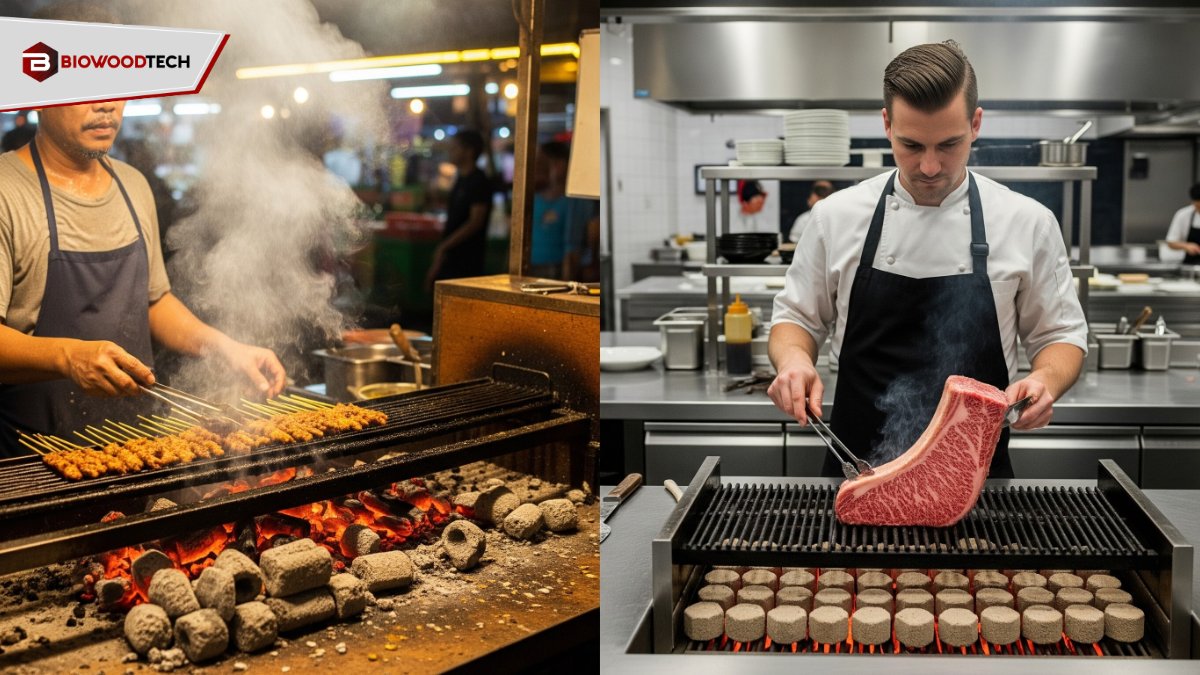
Restaurants, yakitori grills, BBQ chains, and commercial kitchens buy charcoal that:
- Burns evenly over long periods
- Produces minimal smoke and odour
- Leaves low ash residue
Globally, food service accounts for a significant share of traded charcoal. Japan alone consistently ranks among the top importers of wood charcoal by value, reflecting its demand for stable, high-performance fuel rather than bulk volume.
Malaysia fits this segment well because its exporters tend to supply:
- Consistently graded lump charcoal
- Stable moisture levels across batches
- Predictable burn characteristics
For buyers operating daily kitchens, consistency matters more than marginal price differences.
Retail and consumer use
Retail demand is driven by appearance, packaging, and logistics efficiency.
Charcoal sold in supermarkets or hardware stores must:
- Look uniform and clean
- Be packaged securely for long-distance shipping
- Stack and palletise efficiently
This segment dominates imports into parts of the Middle East and East Asia, where charcoal is sold as a consumer product rather than a fuel input.
From a trade perspective:
- Packaging weight and volume affect freight costs
- Uniform sizing reduces breakage claims
- Labelling and documentation accuracy affect customs clearance
Malaysia’s advantage here lies in its export familiarity. Manufacturers accustomed to containerised shipments and documentation controls tend to face fewer downstream issues.
Industrial and processing uses
Industrial buyers treat charcoal as a raw material, not a finished product.
In this segment, charcoal may be used for:
- Metallurgical processes
- Filtration and carbon inputs
- Downstream conversion into activated carbon
Here, buyers focus on:
- Fixed carbon content
- Ash percentage
- Batch consistency
China remains a major importer in this category due to its scale of industrial processing. Large buyers value suppliers who can deliver repeatable specifications at volume, even if unit prices are not the lowest globally.
Why Do Buyers Source Charcoal From Malaysia?
Buyers source from Malaysia because risk is lower, not because prices are lowest.
There are several factors explain why Malaysia is the preferred charcoal supplier:
- Process consistency
Malaysian producers are known for stable carbonisation outcomes and repeatable grading standards. - Established export routines
Many manufacturers have long experience handling documentation, inspections, and shipping audits. - Buyer familiarity
Japanese and regional buyers often prefer suppliers they understand operationally, even if alternatives exist.
In international trade, predictability often beats marginal cost savings.Buyers often stick with Malaysian suppliers because switching suppliers creates risk.
In trade, “risk” means things like:
- Charcoal behaves differently in the grill
- Packaging breaks down in humid shipping conditions
- Shipments get delayed due to missing documents
- The supplier cannot repeat quality at scale
That is why long-standing buyer relationships matter and Malaysia has cultivated plenty in the industry.
Which countries import Malaysian charcoal and why?
Malaysian charcoal is not exported evenly across markets.
Trade data shows that Malaysia’s exports are concentrated in markets that value performance reliability, shipment stability, and repeatable quality.
Japan
Japan is the single largest importer of Malaysian charcoal because performance consistency matters more than price.
Japanese buyers, especially in food service and specialty retail, often specify strict parameters such as:
- Moisture limits to ensure stable ignition
- Uniform sizing for predictable heat control
- Consistent burn duration to support commercial kitchens
- Clean ash profiles to reduce cleaning and maintenance
Malaysia’s reputation for controlled production and grading aligns well with these expectations.
From a data perspective, this preference is clear. In 2023, the total export value of Malaysian wood charcoal (HS 4402) was approximately USD 20 million, and Japan accounted for about 73% of that total, or roughly USD 14.8 million, with much of the remaining volume going to China, Singapore, the United Arab Emirates, Iraq, and Saudi Arabia in smaller single-digit shares.
“Japanese buyers tend to stick with suppliers that deliver the same performance every shipment, even when cheaper alternatives exist elsewhere.”
China
China imports Malaysian charcoal for both direct use and downstream processing, where scale and consistency matter.
Chinese demand typically includes:
- Larger-volume orders
- Broader tolerance on size or grade, depending on use
- Competitive pricing combined with dependable supply
Malaysia’s role here is more selective than dominant. While China sources charcoal from multiple countries, Malaysian exporters tend to serve buyers who prioritise:
- Repeatable batch characteristics
- Stable supply schedules
- Clear export documentation that supports high-volume imports
Middle East
Middle Eastern imports are driven mainly by retail and hospitality demand.
Charcoal entering these markets is often sold directly to consumers or used in restaurants and hotels. As a result, buyers focus on:
- Packaging strength that survives long-distance shipping
- Clean appearance and uniform size for shelf presentation
- Compliance with shipping and safety requirements
Exporters who understand container conditions prefers Malaysia’s experience with containerised exports and documentation accuracy gives it an advantage here.
What types of charcoal does Malaysia typically export?
Malaysia exports multiple charcoal types, not a single standard product.
Common export categories include:
| Charcoal Type | Used For | Why Buyers Choose them |
| Lump Charcoal | Natural wood charcoal pieces used for grilling, restaurant kitchens, and premium BBQ | Burns hotter and cleaner with less smokePreferred by food service because heat and smoke control matter |
| Charcoal Briquettes | Compressed blocks often used for restaurant grills, retail BBQ packs, and household cooking | Uniform shape and size make heat predictable and packaging easier for bulk shipping |
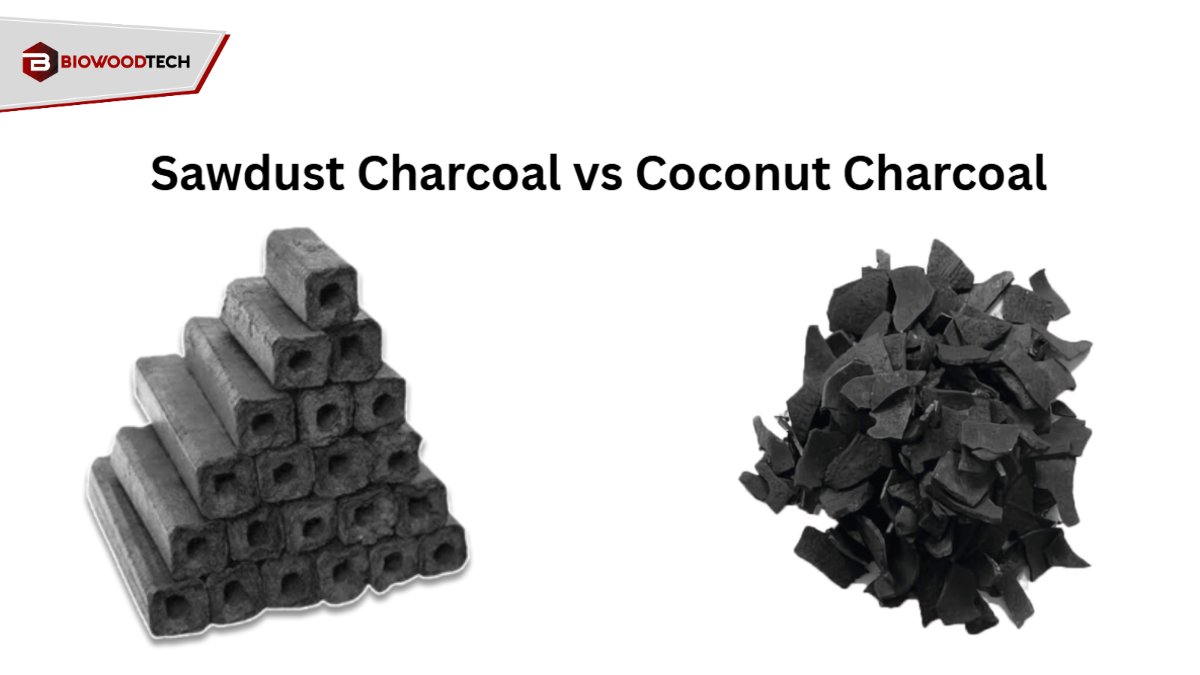
| Shell/ Coconut Charcoal | Charcoal made from hard shells (like coconut) for longer burn and less smoke | Higher surface area and longer burn timesIdeal for specific culinary or retail uses |
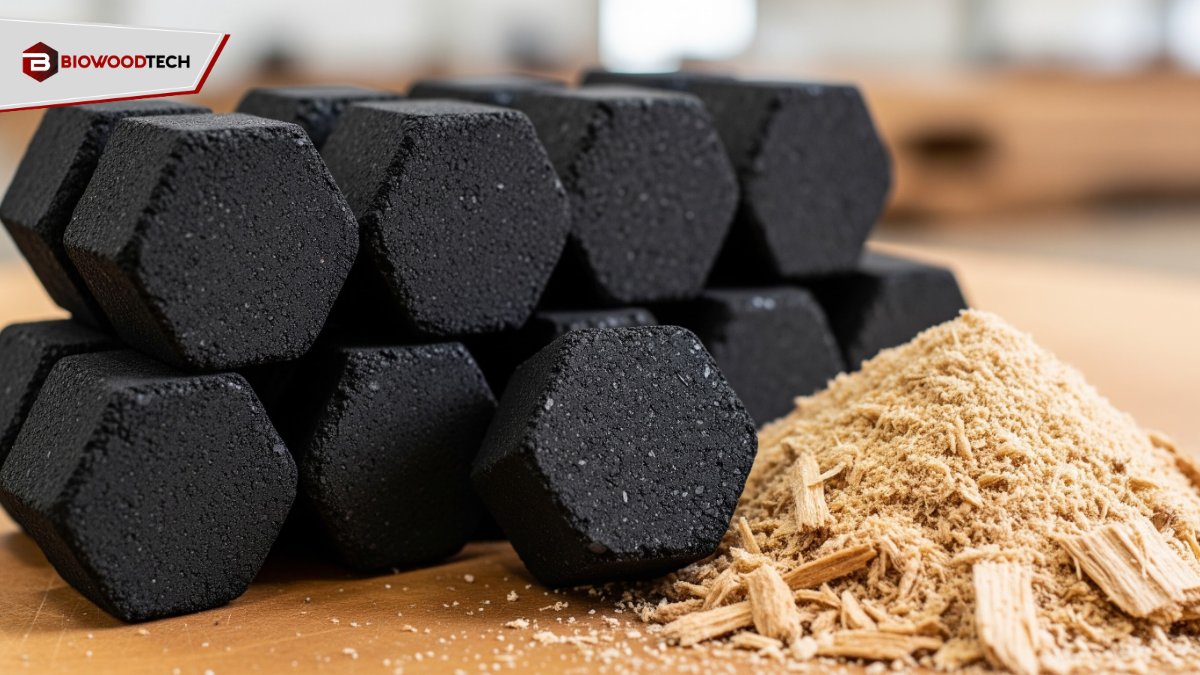
| Sawdust / Agglomerated Charcoal | Charcoal created from compressed sawdust or biomass for consistent industrial heat | Even combustion and consistent quality when used in industrial or secondary processing |
| Specialty Charcoal (binchotan / white charcoal) | High-density charcoal used for specialised grilling or filtering | Extremely stable heat and minimal smokeNiche premium applications |
Many of these varieties, particularly sawdust and coconut shell charcoal, appeal to international markets that prioritize environmental responsibility. For a deeper look at this sector, read our guide on Eco-Friendly Charcoal: Sustainable Sourcing in Malaysia (2026 Guide).
How Should Buyers Evaluate Charcoal Suppliers Before Ordering?
Serious buyers assess risk first, then price.
Price only becomes meaningful once a supplier proves they can deliver the same product, in the same condition, every time.
In practice, buyers tend to look at four main areas.
Sample testing consistency
Buyers do not test once, they test repeatedly.
A single good sample means very little if the next shipment behaves differently. Buyers usually check whether:
- Multiple samples from different batches burn similarly
- Heat output and burn time stay consistent
- Smoke and ash levels remain predictable
If test results vary from batch to batch, buyers assume production control is weak, regardless of price.
This is true for restaurant buyers and distributors who cannot afford operational surprises.
Past shipment records
Past shipments are treated as proof, not history.
Buyers often ask:
- Has this supplier shipped internationally before?
- Were there delays, rejections, or damaged cargo?
- Did the product arrive in usable condition?
A supplier with fewer shipments but clean delivery records is often preferred over a cheaper supplier with frequent issues.
Responsiveness on documentation questions
Documentation handling reveals how export-ready a supplier really is.
Charcoal shipments often involve:
- Product declarations
- Safety or material documents
- Packing and container details
Buyers pay close attention to how suppliers respond to these questions. Slow replies, unclear answers, or inconsistent paperwork raise red flags quickly.
Suppliers who can explain documents clearly tend to move forward faster in negotiations.
Understanding of buyer specifications
Buyers want to know that suppliers understand why specifications exist.
For example:
- Why a moisture limit matters for storage
- Why size grading affects burn control
- Why packing method affects heat build-up during shipping
Manufacturers who can explain why their charcoal behaves a certain way earn trust faster than those who only quote prices or repeat specifications without context.
Most buyers ask themselves:
“If I reorder this charcoal six months from now, will it behave the same way and arrive without problems?”
Conclusion: Malaysia’s Role in Charcoal for Export
For buyers, Malaysia represents a strong sourcing option where fewer things go wrong.
Performance is predictable, shipments are better prepared, and communication tends to be clearer across the supply chain and that reliability is why Malaysian charcoal continues to move into demanding markets year after year.
At Biowoodtech, we specialise in exporting sawdust briquette charcoal designed for buyers who value consistency, controlled burn performance, and export-ready packaging.
Our focus is not just on producing charcoal, but on supplying a product that arrives as expected, performs as specified, and can be reordered with confidence.
If you are evaluating suppliers and want a charcoal partner that understands both production and export realities, we are the go-to charcoal supplier.
Source:
- The Business Research Company – Charcoal Global Market Report
Global charcoal market size and growth forecast (USD 5.64B in 2024, forecast to USD 7.84B by 2029 / related summaries). - TrendEconomy – Malaysia exports of Wood Charcoal (HS 4402), 2023
Confirms Malaysia’s 2023 exports of HS 4402 are about USD 20M, with Japan ≈ USD 14.8M (73% of exports) and other key destinations (China, Singapore, UAE, Iraq, Saudi Arabia). - Trading Economics – Malaysia Exports of Wood and Articles of Wood, Wood Charcoal (HS Chapter 44)
- HS 4402 Definitions (Customs / trade references)
Confirms HS 4402 is “Wood charcoal (including shell or nut charcoal), whether or not agglomerated” and is the standard code used in Malaysian and global trade stats. - CINS – Guidelines for the Safe Carriage of Charcoal in Containers, September 2024 (PDF)
- TT Club / CINS summary – Guidelines for the Safe Carriage of Charcoal in Containers
- Britannia P&I – Safe Carriage of Charcoal in Containers
Article + PDF explaining that charcoal is classified as UN 1361 “CARBON, animal or vegetable origin”, Class 4.2 (self-heating), and that the updated IMDG Code requires treating charcoal as DG. - IIMS (International Institute of Marine Surveying) – Safe Carriage of Charcoal in Containers
Industry piece summarising CINS/IMDG guidance and reinforcing best practices on classification, packaging, and documentation. - Data Bridge Market Research – Global Charcoal Market
Used only as a secondary cross-check on market segmentation (lump charcoal, briquettes, etc.)
Frequently Asked Questions About Charcoal Export
Consistency in production, established export routines, and familiarity with international buyer requirements make Malaysian charcoal reliable for global markets.
It is often priced above mass-volume suppliers, but buyers pay for predictability and reduced shipping risk.
Japan, China, and Middle Eastern countries remain among the most consistent importers due to performance and supply reliability.
Yes. Charcoal is treated as self-heating cargo and often requires test reports, MSDS, and declarations.
Most failures result from documentation errors, packaging issues, or misunderstanding shipping classifications.
Demand remains steady, especially in food service and retail markets that value consistent quality over lowest price.