Key Takeaways
- Direct sourcing removes the “middleman tax,” immediately improving your profit margins on every container.
- Factories control the raw material mix, ensuring the burn time and ash content remain identical batch after batch.
- OEM and customization (packaging, shape, size) are faster and more accurate when communicating directly with the production floor.
- Supply chain security is higher with factories; traders often face stock shortages during peak seasons when manufacturers prioritize direct clients.
- Resolving quality issues is immediate because you are speaking to the source of the product, not a sales agent with no production access.
Why Buy Direct?
Buying directly from a manufacturer is the only way to secure consistent margins and quality control in the 2026 charcoal market.
Trading companies and aggregators offer convenience, but that convenience comes at a steep price—often 15-30% markup and a lack of transparency regarding the product’s origin.
If you are a serious distributor scaling your operation, relying on a middleman introduces unnecessary risk regarding supply stability and product uniformity.
🏭 Comparison: Charcoal Factory vs. Trading Company
| Feature | Charcoal Factory (Direct) | Trading Company (Middleman) | Winner |
| Pricing | Lowest (Factory Gate Price) | Higher (Includes Commission/Markup) | Factory |
| Consistency | High (Single Source Control) | Low (Sourced from multiple kilns) | Factory |
| Customization | Full OEM/ODM capabilities | Limited to what they can source | Factory |
| MOQ | Medium to High (Container loads) | Low (Pallet loads possible) | Trader |
| Communication | Direct Technical Access | Filtered through Sales Agents | Factory |
| Accountability | Full liability for quality | Blame often shifted to supplier | Factory |
How Does Cutting Out Middlemen Improve Charcoal Consistency?
Eliminating the aggregator ensures you receive product from a single, controlled production line rather than a mix of various suppliers.
When you buy from a trading company, they often fill a single order by aggregating charcoal from three or four different small kilns.
While the charcoal might look similar, the density and moisture content vary significantly. This leads to customer complaints about “bad batches” where the charcoal sparks or burns out too quickly.
By partnering with a high quality charcoal manufacturer, you lock in a specific recipe.
We control the raw material sourcing (e.g., sustainable mangrove or sawdust), the carbonization temperature, and the cooling process. This technical control means the box you open in January performs exactly like the box you open in July.
“In our internal tests, mixed-source charcoal from traders showed a 25% variance in burn time within the same container. Factory-direct batches showed less than 5% variance.” — QC Report, Biowoodtech
Can Factories Offer Faster Customization Than Traders?
Direct access to the production team allows for rapid prototyping of packaging and briquette shapes without the “telephone game” delays.
Traders are essentially sales agents; they have to ask the factory if a request is possible, wait for a reply, and then quote you a marked-up price for the change.
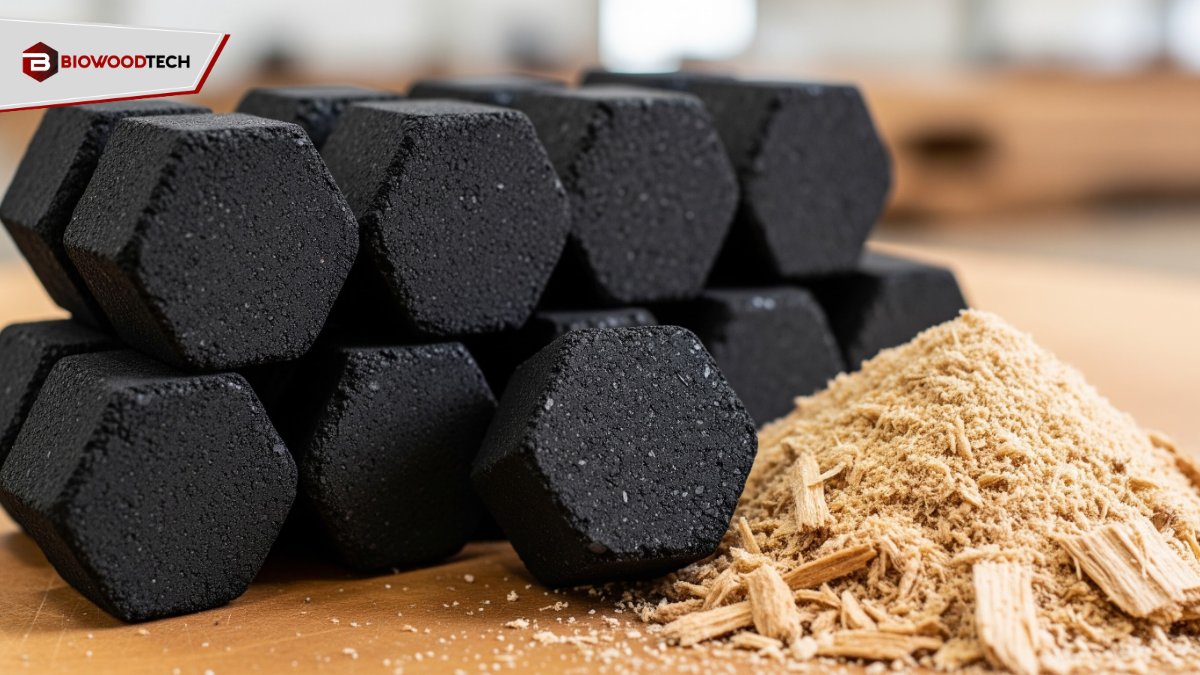
This process can take weeks. If you need a specific box design or a unique hexagonal cut for a new market, a factory can approve the feasibility and costs in real-time.
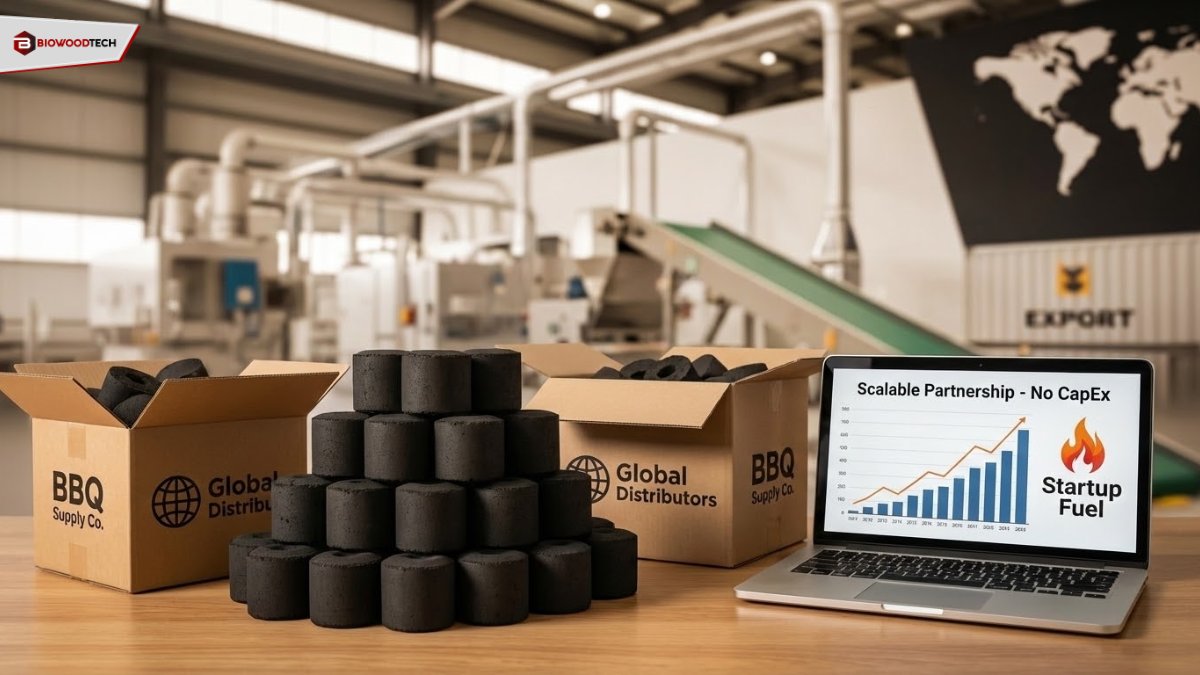
For businesses looking for OEM charcoal services, speed is revenue. A charcoal manufacturer Malaysia based facility can adjust the production mold or print specifically for your brand immediately. You aren’t just buying a product; you are renting the factory’s capacity to build your own brand assets.
Do Direct Buyers Get Priority During High-Demand Seasons?
Factories naturally prioritize their direct contracts and long-term partners over spot-buy trading companies when supply gets tight.
The charcoal industry is seasonal. During monsoon seasons or high-export months (like pre-summer BBQ season in Europe), production capacities hit their limit.
When stock is low, manufacturers fulfill orders for their direct clients first.
Trading companies are often left scrambling to find stock from second-tier suppliers when the primary factories are full. This is where quality drops and delays happen.
Being a direct partner with a factory protects your supply chain against these market fluctuations.
What Quality Controls Are Lost When Buying Through Distributors?
Distributors rarely inspect the goods at the kiln site, whereas factories implement multi-stage QC before packing.
A trading company usually sees the product only when it is already packed and loaded onto the truck or container. They cannot check for moisture content inside the briquette or ensure the carbonization was complete. They rely on trust.
A dedicated factory implements QC at three stages:
- Raw Material: Checking wood density and moisture before carbonization.
- Post-Kiln: Testing fixed carbon levels and ash content.
- Pre-Pack: Visual inspection to remove cracks or irregular shapes.
If you are a charcoal supplier looking to build a reputation for premium goods, you need the audit trail that only a factory can provide.
Ready to Upgrade Your Supply Chain?
Tired of inconsistent batches and shrinking margins? Moving your procurement to a direct factory model is easier than you think.
See how the final product is used in farming: What Is the Use of Charcoal in Agriculture? (Biochar Guide 2026)
Final Thoughts on Factory Direct Sourcing
Switching from a trader to a charcoal factory isn’t just about saving a few percentage points on the invoice; it is about securing the future of your brand.
By controlling the quality at the source, you stop reacting to customer complaints and start building market dominance.
If your volume supports full container loads, the logistical “ease” of a trader is no longer worth the cost. It is time to own your supply chain.
FAQs
Most factories require a Minimum Order Quantity (MOQ) of one 20ft or 40ft container to make the logistics and export documentation cost-effective.
Yes. Established Malaysian factories handle the BL, Certificate of Origin, and Phytosanitary certificates required for international customs clearance.
The risk is mitigated by requesting samples and visiting the factory (or requesting a video tour) to verify their production capacity before signing a contract.
Depending on the volume and charcoal type, businesses typically save between 15% to 30% by removing the trader’s markup and commission.
Yes. Through OEM services, a factory can analyze your current sample and adjust their production formula to match or improve upon it.
While traders might offer credit to secure sales, factories usually require a deposit. However, credit terms often become available for long-term, trusted direct partners.