Key Takeaways
- On a medium lidded grill, 2kg of quality briquettes usually gives around 3 to 5 hours of steady, medium heat.
- On an open, shallow grill, 2kg of lump charcoal typically lasts closer to 1.5 to 3 hours because heat escapes faster.
- Burn time from 2kg depends mainly on charcoal type, grill design, airflow, cooking temperature, and how tightly you pack the fuel.
- A simple planning rule is roughly 1kg of lump charcoal per hour of active grilling, with briquettes lasting slightly longer per kilogram.
- Careful vent control, two-zone setups, and reusing unburnt pieces can stretch 2kg much further for regular home use or small F&B operations.
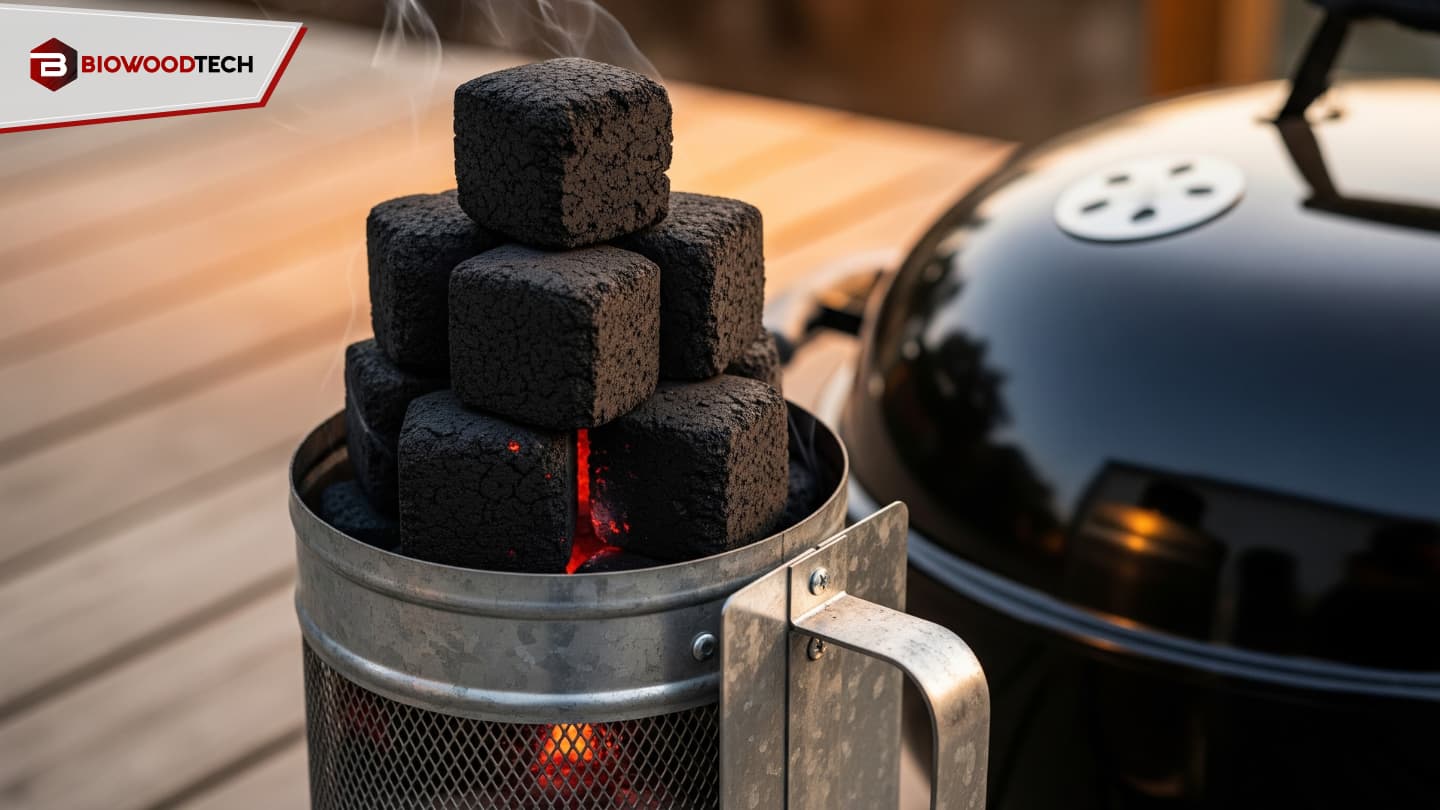
For most medium-sized covered grills, 2kg of decent sawdust charcoal briquettes gives around 3 to 5 hours of cooking time at moderate heat. With lump charcoal on an open grill, expect roughly 1.5 to 3 hours, depending on how hot you run the fire and how windy it is.
But what do these numbers really mean? We will explore that and more on how different grills, charcoal types change the picture, so that you can plan your fuel.
Yes, we do mean plan, because nothing is worse than running out of charcoal while grilling with hungry customers waiting for their orders.
Comparison: How Far 2kg Of Charcoal Usually Goes
| Scenario | Charcoal Type | Grill Style | Approx Burn Time | Best For |
| Small portable grill, open grate | Lump charcoal | Open, no lid | 1.5 – 2 hours | Quick burgers, sausages, skewers for 2–4 people |
| Medium 57cm kettle, lid on | Briquettes | Covered, vents half open | 3 – 5 hours | Mixed grilling session or small gathering |
| Bullet smoker, low-and-slow | Briquettes / briq blend | Covered, restricted airflow | 4 – 6 hours | Slow cook for ribs, chicken, pulled meat |
| Long satay-style pit, windy evening | Sawdust briquette logs | Mostly open, long bed | 2 – 4 hours | Skewers, satay, yakitori-style cooking |
| Short tabletop grill | Lump + briquette mix | Shallow, half covered | 1.5 – 3 hours | Table grilling, Korean BBQ style portions |
Note: These figures are approximate, not lab measurements. They give a planning range so you can decide whether one 2kg bag is enough or if you should have a second on standby.
How Long Does 2kg Of Charcoal Typically Last On Different Grills?
The same 2kg of charcoal BBQ can last under 2 hours or almost 6, depending on grill design and airflow.
On an open grill with no lid, much of the heat escapes straight into the air. The charcoal has to burn hotter to maintain cooking temperature, so 2kg disappears faster.
On a covered grill, especially a kettle or kamado-style cooker, vents control airflow and heat stays trapped inside. Here, 2kg of briquettes can stretch to several hours of steady cooking, particularly at medium heat rather than full blast.
Fascinating right? A simple way to think about it:
- Open hibachi or wire mesh grill:
- 2kg of lump charcoal
- Roughly 1.5 to 2.5 hours of useful grilling time
- Medium kettle with lid, vents half open:
- 2kg of briquettes
- Around 3 to 5 hours of cooking at moderate heat
- Smoker using a snake or minion method:
- 2kg of briquettes or compressed briquette logs
- 4 to 6 hours of gentle heat for low-and-slow cooking
Rule of thumb: The more you can close the lid and calm the airflow, the longer 2kg of charcoal lasts for the same temperature.
“Fire needs 3 things to keep going, fuel, oxygen and heat”
What Factors Change How Long 2kg Of Charcoal Burns?
Charcoal type, airflow, cooking temperature, and even the weather all decide how long 2kg lasts.
The main variables are:
Charcoal type
- Lump charcoal lights quickly, burns hotter, and tends to finish faster.
- Briquettes are denser and more uniform, so 2kg usually burns longer at a given temperature.
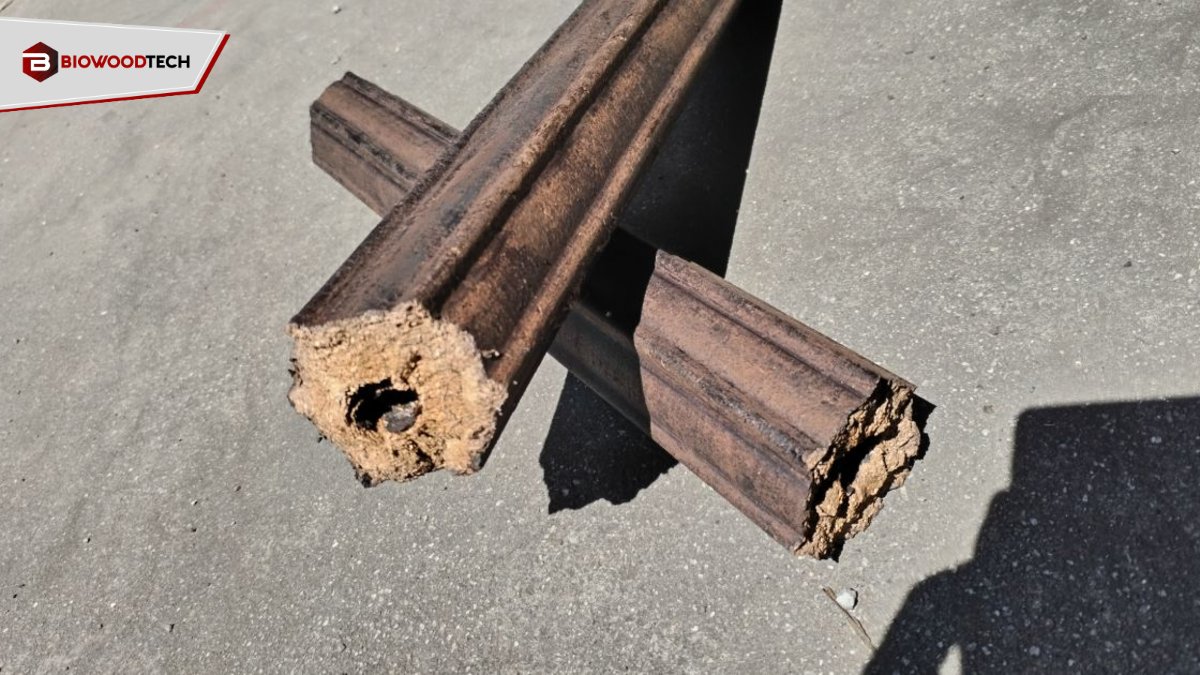
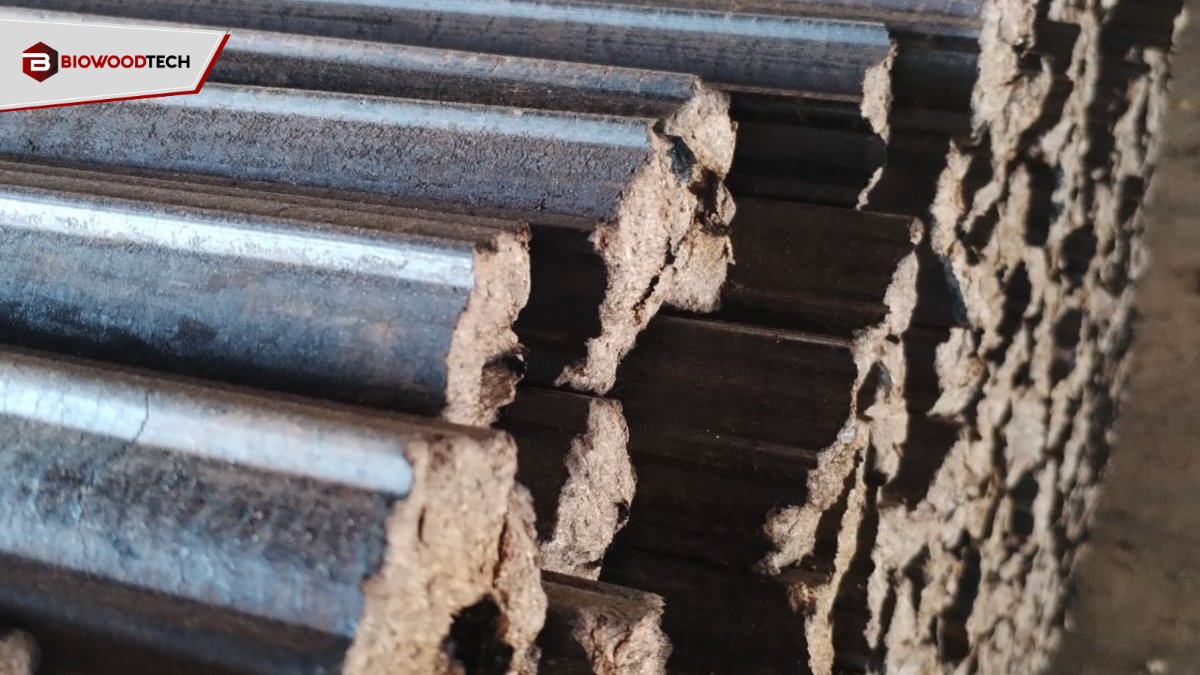
- Compressed sawdust or coconut briquettes are designed for long, steady burns.
Grill shape and design
- Deep kettles, drums, and smokers can bank coals in thicker layers and limit wind.
- Shallow grills and open baskets expose more charcoal surface to oxygen, speeding up burn.
Airflow settings
- Wide-open vents mean strong airflow and hotter, shorter burns.
- Partially closed vents slow the burn and extend life, at the cost of slightly lower maximum heat.
Cooking temperature
- Searing steaks at very high heat drains 2kg fast.
- Moderate grilling for chicken wings or skewers uses fuel more slowly.
Weather conditions
- Windy, cooler evenings: charcoal burns quicker as air feeds the fire constantly.
- Warm, still nights: easier to maintain medium heat with less fuel.
A simple planning mindset helps: If you know you need high heat for a short blast, 2kg might be enough even on a smaller, open grill. For a long, relaxed session, a covered grill or smoker is a better match for those same 2kg.
How Do Different Charcoal Types Affect A 2kg Burn?
The denser and more uniform the charcoal, the more cooking time you tend to get from 2kg.
Broadly, you will encounter three common fuel types for BBQ:
| Charcoal Type | Lights Fast? | Heat Level | Burn Time From 2kg (Medium Grill) | Notes |
| Lump charcoal | Yes | Hot, responsive | 1.5 – 3 hours | Great for searing, burns irregularly |
| Regular briquettes | Slower | Steady, medium-hot | 3 – 5 hours | Reliable for beginners and casual grilling |
| Compressed log briquettes | Slower | Steady, long-burning | 4 – 6 hours | Suitable for longer services and smokers |
A few practical observations:
Lump charcoal
- Excellent for high-heat searing and quick dinners.
- Two kilograms can vanish quickly if you cook with vents wide open and lid off.
Standard Briquettes
- Better at holding a stable temperature for repeated batches of food.
- Two kilograms is usually enough for a full evening of moderate grilling for a small group.
Compressed Sawdust Or Coconut Briquettes
- Popular for satay, yakitori, or long outdoor cooking, as they burn longer and more consistently.
- 2kg here can feel closer to a “shift” of fuel rather than a short session.
If you are planning food cost or fuel cost for a small F&B operation, using one briquette type and tracking their burn time give you predictable numbers over time.
Read More: OEM Charcoal Services: Custom Shapes, Logos & Packaging
How Much Cooking Can You Do With 2kg Of Charcoal?
2kg doesn’t sound like a lot, but you have to think in terms of people served and cooking style, not just hours on the clock.
Two kilograms of charcoal on a medium, covered grill at moderate heat can usually handle something like:
- 8 to 12 burgers,
- Plus a tray of sausages,
- Plus a few rounds of chicken wings or skewers,
As long as you stagger cooking and use the lid to keep heat stable.
For a more open, high-heat style, such as heavy satay grilling on a long, windy pit, 2kg might only handle one solid round of skewers before you feel the heat dropping.
In that kind of setup, many operators treat 2kg as roughly:
- One short, intense service window, or
- One section of a longer shift, with fresh fuel added as they go.
If you want a simple planning picture for home use:
Quick weeknight grill for 2–4 people: 2kg of lump charcoal or briquettes is usually enough, often with some leftover.
Long social BBQ with multiple rounds of food:
- 2kg of briquettes on a covered kettle is normally fine for 3–4 hours.
- Keeping a second 2kg bag nearby removes any worry.
Still unsure how much fuel you need for your own grill and style of cooking? The next section walks through ways to stretch 2kg further and avoid mid-party panic.
How Can You Make 2kg Of Charcoal Last Longer?
Smart setup and airflow control often give you more extra time than adding another half bag.
You can extend the effective life of 2kg of charcoal by:
Using a two-zone setup
- Bank charcoal on one side for direct heat.
- Leave the other side mostly empty for indirect cooking and resting food.
- You use intense heat only where needed, so 2kg goes further.
Controlling the vents, not just the lid
- Start with vents mostly open to light and stabilise.
- Once heat is set, closing vents halfway slows airflow and fuel consumption.
Laying Charcoal In Thicker, More Compact Layers
- Thin, scattered pieces burn faster and unevenly.
- A slightly deeper bed with bricks or briquettes packed together burns steadier and longer.
Preheating Only What You Need
- Avoid lighting the entire 2kg at once if you only need a gentle fire.
- Light part of the fuel in a chimney starter, then add more unlit charcoal on the grill if required.
Reusing Partially Burnt Pieces
- When you shut down the grill by closing all vents, many pieces turn white outside but remain solid inside.
- These can be mixed with fresh charcoal in the next session to stretch your 2kg plan.
A small amount of planning makes a huge difference. With good vent control and two-zone cooking, many people are surprised how much food they can cook from a single 2kg charge.
2kg of Charcoal Can Take Restaurants Far
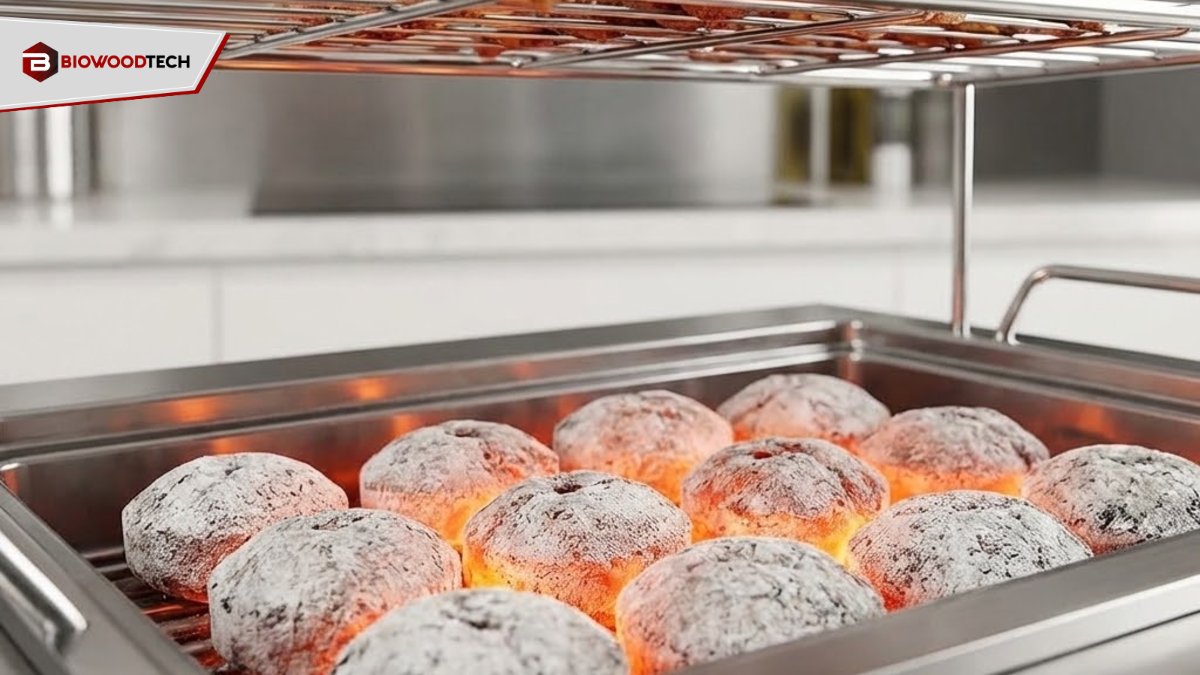
Two kilograms of charcoal goes a surprisingly long way when airflow, grill type, and cooking style work in your favour. On most covered grills, 2kg of briquettes provides several hours of stable heat, enough for a relaxed evening of repeated batches.
If you want charcoal that delivers consistent burn time and steady heat for your own sessions, Biowoodtech’s restaurant grade charcoal is produced with uniform density, clean burn characteristics, and has a really impressive burn performance on grills!
Our charcoal grades comes with:
Grade A
High-density, long-burn fuel that lasts up to six hours with slow, steady heat. Ideal if you want premium BBQ performance, longer cooking windows, and consistent temperature control.
Grade B
Medium-density charcoal built for everyday grilling. Burns four to five hours with moderate, reliable heat. Suitable for regular cooking, small F&B operations, and repeat batches.
Grade C
Low-density charcoal that lights fast and burns quickly. Best for short sessions, quick meals, or high-heat bursts when you want instant flame and strong output.
Still unsure which arang kayu you should go for? Get a FREE Sample today by contacting us and we will get you started!
Frequently Asked Questions About 2kg Of BBQ Charcoal Burn Time
On a medium kettle with a lid and decent briquettes, 2kg usually lasts roughly 3 to 5 hours of moderate heat, assuming vents are not fully wide open.
For 2–4 people using a covered grill, 2kg is typically enough for burgers, sausages, and a few extra items. For bigger groups, keep a second bag ready.
For 2–4 people using a covered grill, 2kg is typically enough for burgers, sausages, and a few extra items. For bigger groups, keep a second bag ready.
At similar temperatures, briquettes usually last longer per kilogram than lump charcoal. Lump burns hotter and faster, which is helpful for searing but shortens total burn time.
If you are using a covered grill with briquettes, one 2kg bag may be enough, but two gives a safer margin. For open grills, assume closer to one bag per 2–3 hours.
Yes. As long as the old pieces are fully dry and free of ash dust and moisture, you can mix them with fresh charcoal and treat the combination as part of the 2kg charge.
Common reasons include strong wind, vents left fully open, very thin fuel layers, very high cooking temperatures, or damp charcoal that burns unevenly and wastes energy. Adjusting these usually brings burn time closer to the ranges above.