Sawdust charcoal has become a practical fuel choice for BBQ operators, restaurants, caterers, distributors and small industrial users who need heat that behaves consistently. The main benefits of sawdust charcoal are steady burn performance, lower visible smoke after ignition, easier handling, reduced waste, and better use of wood residues that might otherwise be discarded.
For Malaysian F&B teams, those benefits matter every day. A charcoal that burns evenly can reduce refuelling during peak hours, keep grill temperatures easier to control and make storage less messy in humid conditions. For buyers comparing lump charcoal, coconut shell charcoal and sawdust charcoal briquettes, the right choice often comes down to consistency, burn time, ash level and cost per usable hour.
Key Takeaways
- Sawdust charcoal is made from compressed wood residues, giving it a more uniform shape and burn pattern than irregular lump charcoal.
- Good sawdust charcoal briquettes can support long, steady cooking sessions with manageable ash and fewer sparks.
- Using sawdust as a raw material helps turn timber byproducts into usable energy instead of leaving them as low-value waste.
- For restaurants, caterers and BBQ operators, the biggest operational benefit is predictable heat during busy service.
- Quality still matters: moisture content, density, carbonisation and storage conditions decide how cleanly the charcoal burns.
What Is Sawdust Charcoal?
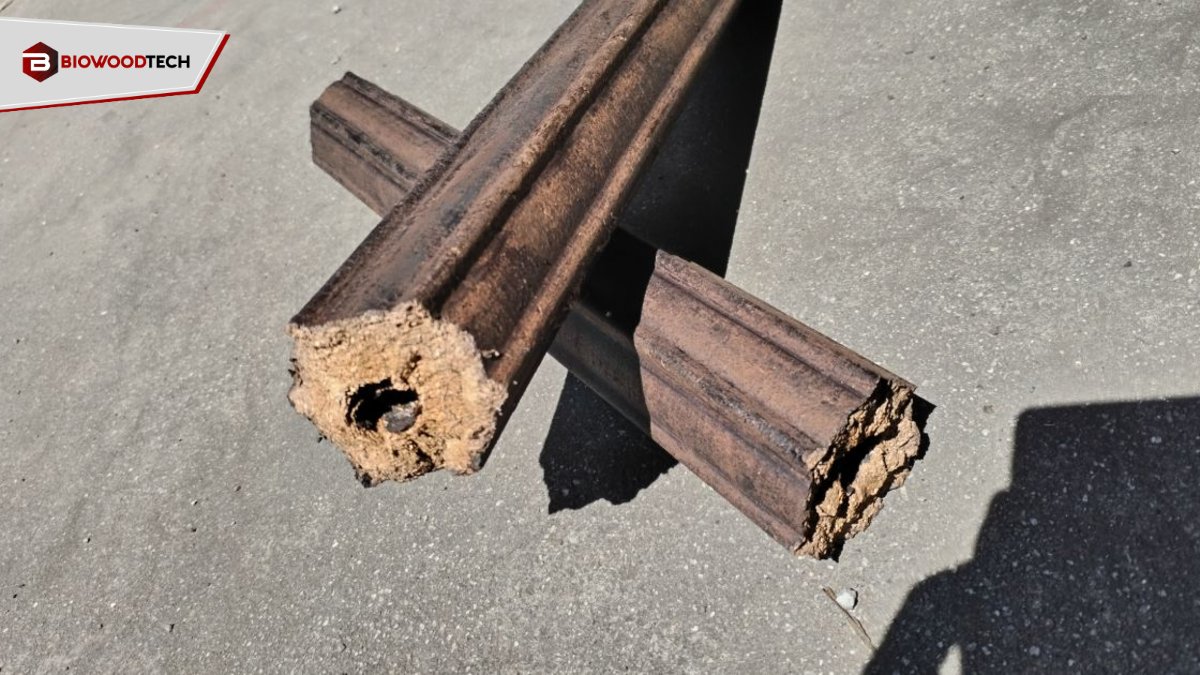
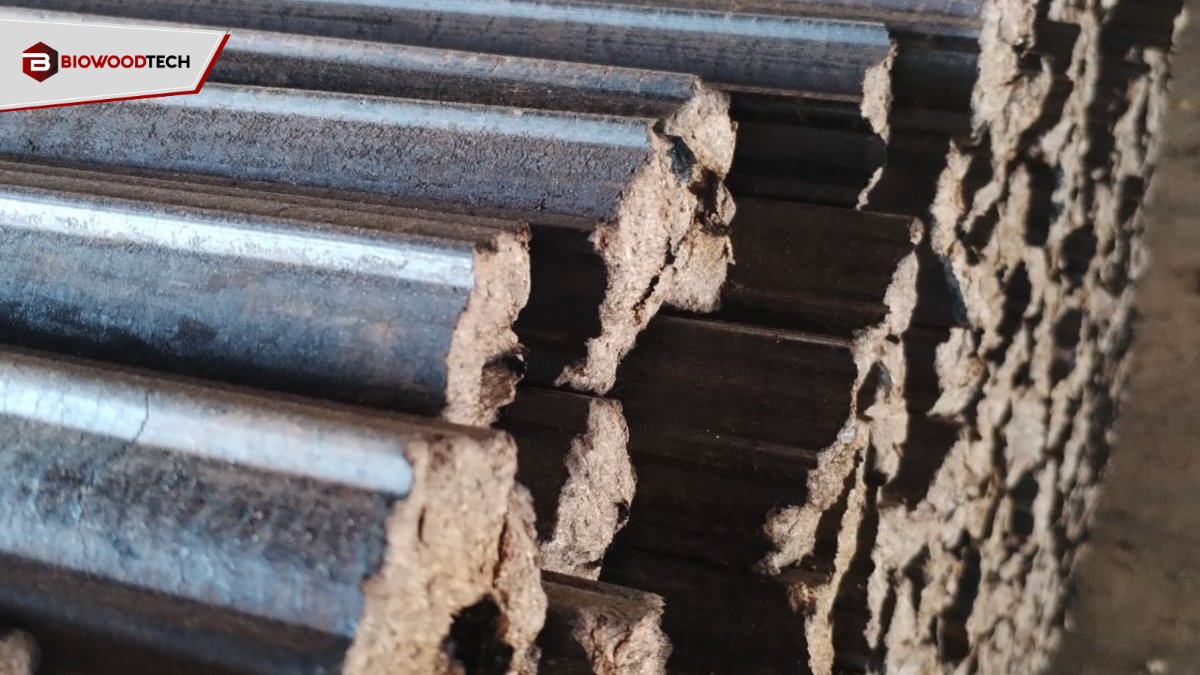
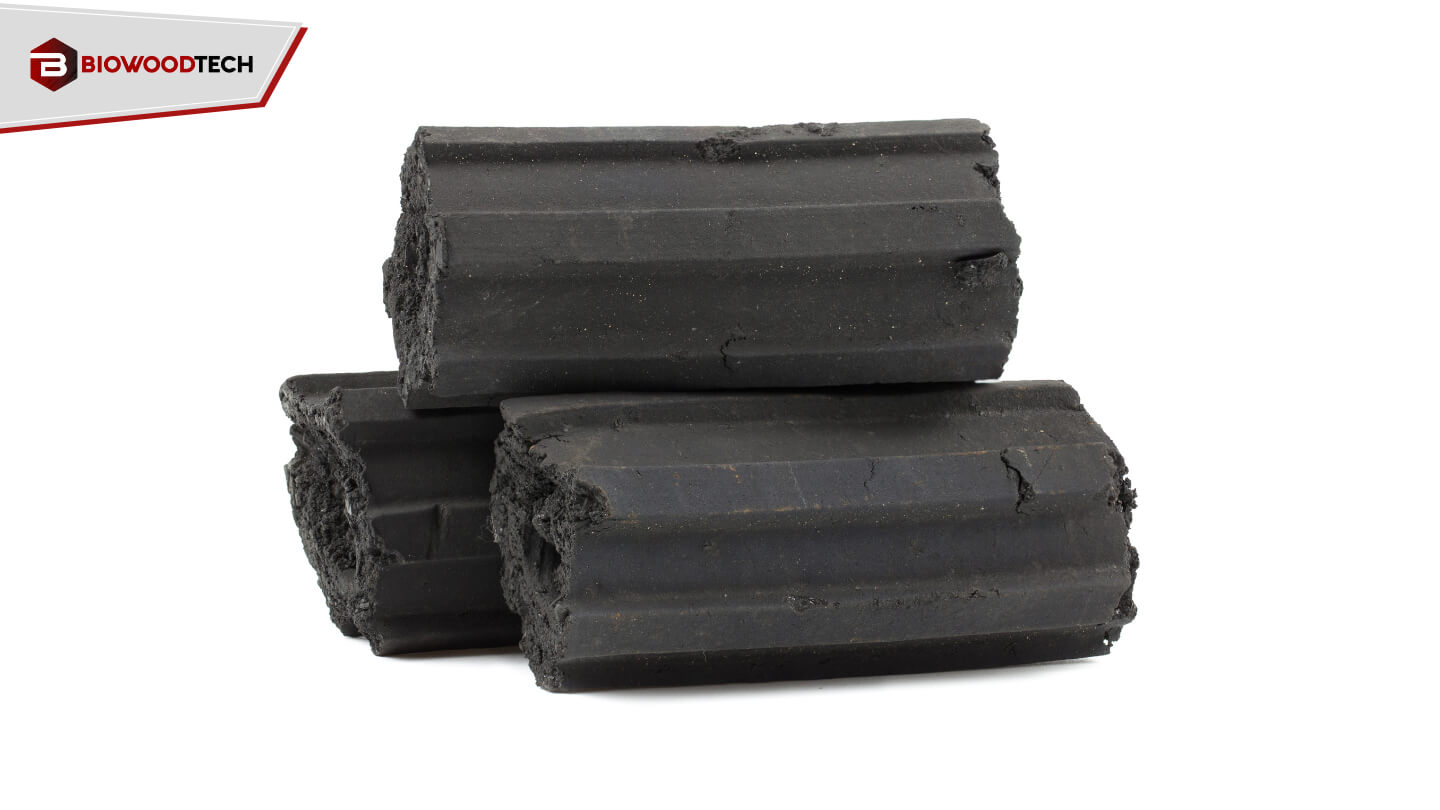
Sawdust charcoal is a biomass charcoal fuel made by converting clean sawdust or wood residues into dense charcoal briquettes. Depending on the production method, the sawdust is usually dried, compressed into a uniform shape, carbonised under controlled heat and prepared for cooking or heating use.
Unlike loose sawdust, which is difficult to burn cleanly and store efficiently, sawdust charcoal briquettes are dense and shaped for practical use. Biowoodtech’s guide to briquettes charcoal types and sizes explains that sawdust briquettes are commonly used for BBQ, steamboat, claypot cooking and small boilers because they offer medium-to-high heat with relatively low smoke when made properly.
Research also supports the idea that densifying biomass improves handling and fuel value. A study published in the International Journal of Energy and Environmental Engineering found that sawdust charcoal briquettes tested at 5.7% moisture content, 2.6% ash content and 4,820 kcal/kg calorific value were viewed by users as easy to ignite, long burning and lower in smoke and ash than regular charcoal.
Top Benefits of Sawdust Charcoal
1. It Gives Steadier Heat for Grilling and Cooking
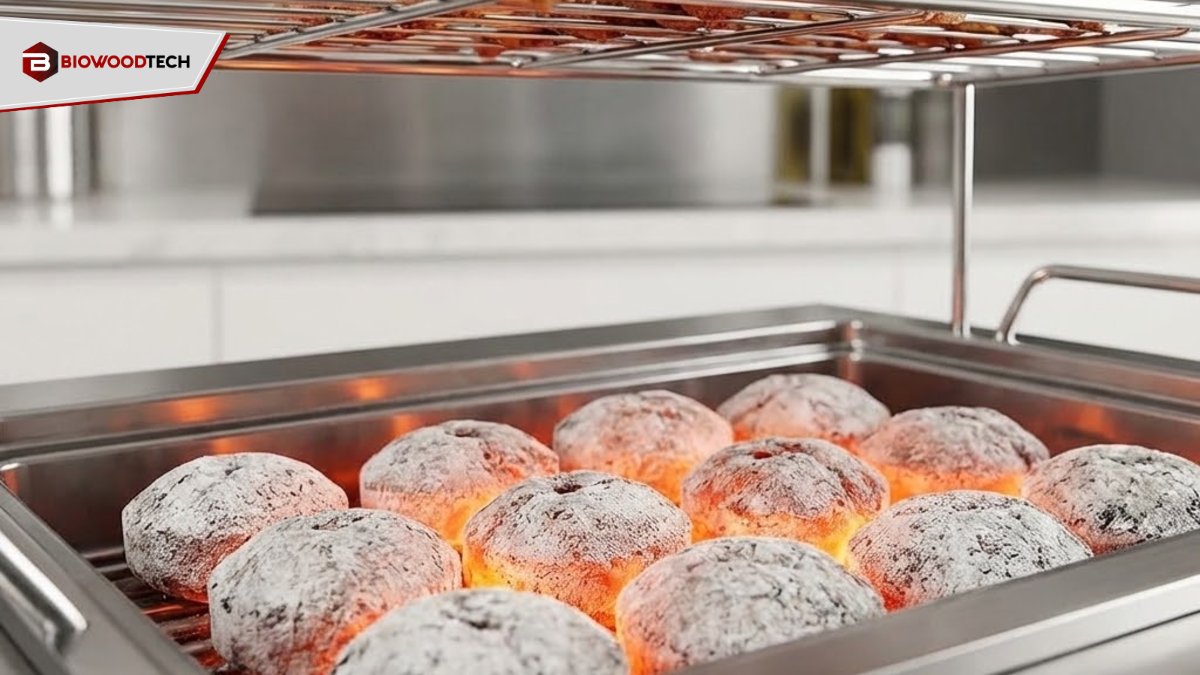
The most practical benefit of sawdust charcoal is heat consistency. Because sawdust briquettes are pressed into uniform shapes, each piece tends to burn in a more predictable way than random lump charcoal.
That matters for:
- Satay grills
- Yakitori and skewer stations
- Claypot cooking
- Steamboat and tabletop grills
- Catering lines
- BBQ pits
- Small heating equipment
With lump charcoal, one bag may contain large chunks, tiny pieces and dust. This affects airflow and can create sudden heat spikes or weak spots. Sawdust charcoal briquettes are easier for staff to arrange, light and top up using a repeatable process.
Biowoodtech’s comparison of charcoal briquettes vs lump charcoal makes the same operational point: lump charcoal is useful for fast, intense heat, while briquettes are better for long, stable burns.
2. It Can Burn Longer Than Loose or Irregular Charcoal
Longer burn time is one of the clearest sawdust briquette charcoal benefits for commercial users. A dense briquette stores more usable fuel in a consistent shape, so it can release heat gradually instead of burning away quickly.
For restaurants and caterers, that can mean fewer interruptions during service. Staff do not need to top up the grill as often, and the cooking temperature is easier to maintain across multiple batches of food.
In practical terms, burn time depends on:
- Briquette density
- Charcoal grade
- Moisture content
- Grill design
- Airflow control
- How tightly the charcoal is packed
- Whether the grill is open or covered
Biowoodtech’s page on sawdust charcoal grades notes that premium sawdust charcoal grades can outperform general grades in burn time, peak temperature and ash control. This is why buyers should compare grade and specification, not just price per kilogram.
3. It Produces Less Mess When the Quality Is Right
Good sawdust charcoal is easier to handle because the pieces are shaped, dense and less likely to break into excessive dust during normal use. This improves storage, transport and daily kitchen cleanliness.
For F&B operations, less dust and more consistent pieces can help with:
- Cleaner storerooms
- Faster grill setup
- Less waste at the bottom of each bag
- Easier stock counting
- More predictable fuel planning
The Food and Agriculture Organization notes that charcoal handling can create fines, sometimes around 10% by weight in better cases and 20% or more in worse cases. Briquetting is one way to turn fine charcoal material into a convenient product with uniformity that is attractive for barbecue use.
4. It Supports a Waste-to-Energy Approach
Sawdust charcoal turns wood processing residues into useful fuel. Instead of treating sawdust as a disposal problem, manufacturers can convert it into a value-added energy product.
This is especially relevant in wood-processing regions where sawdust, offcuts and timber byproducts are generated regularly. In its research background, the International Journal of Energy and Environmental Engineering describes biomass resources, including wood waste and agricultural residues, as accessible feedstocks for bioenergy. The same study notes that raw biomass residues can be difficult to use directly because of low bulk density and handling challenges, while briquetting improves their practical fuel value.
For buyers, this gives sawdust charcoal an important sustainability advantage. It does not automatically make every product carbon neutral, and production practices still matter, but it does help reduce dependence on whole-log charcoal when the raw material is responsibly sourced.
5. It Helps Reduce Sparks and Sudden Flare-Ups
Well-carbonised sawdust charcoal briquettes usually offer calmer combustion than inconsistent charcoal pieces. Because the material is processed and compressed, the burn is easier to manage and less likely to surprise staff with sudden pops, sparks or uneven flame.
This is valuable for:
- Customer-facing grill stations
- Semi-indoor kitchens
- Catering setups
- Homestay BBQ pits
- Food courts and shoplot operations
Sparks and flare-ups are not only annoying. They can affect food quality, increase staff stress and make a grilling area feel less controlled. A more stable charcoal gives the team a smoother routine.
6. It Can Produce Lower Visible Smoke After Ignition
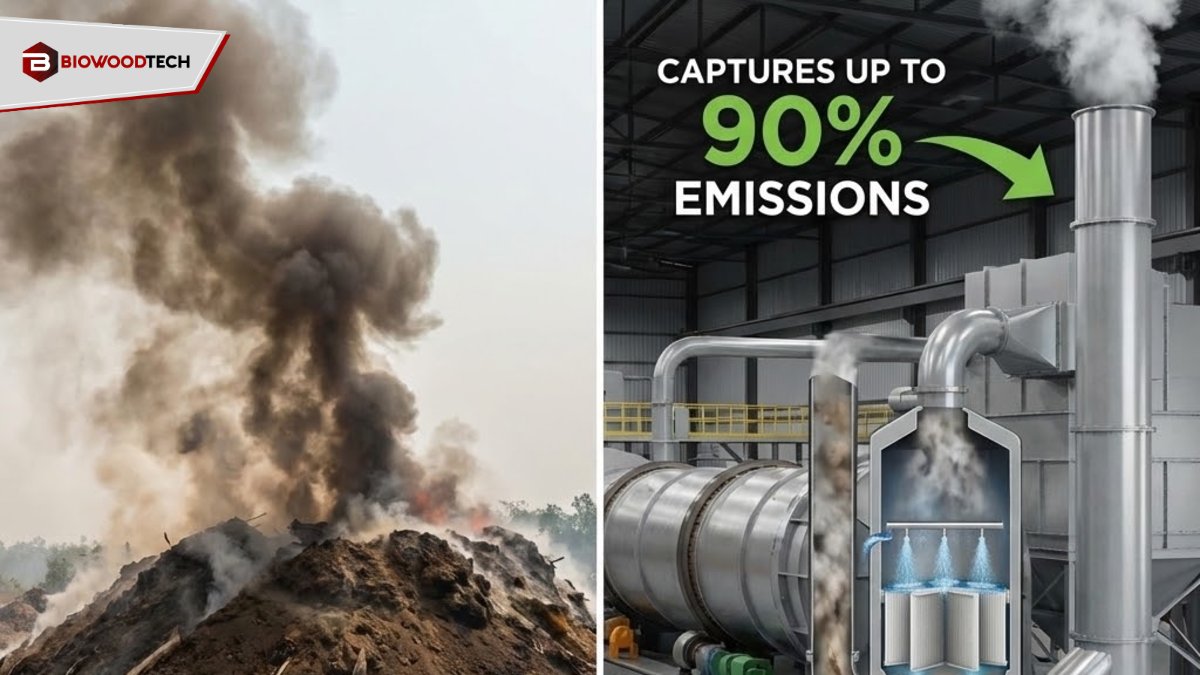
Sawdust charcoal is often marketed as low smoke or smokeless charcoal, but buyers should understand the difference. No charcoal is completely smoke-free. Smoke can still appear during lighting, when the fuel is damp, or when oil and marinade drip onto hot coals.
The benefit of high-quality sawdust charcoal is that, after proper ignition, it can burn with lower visible smoke compared with damp, poorly carbonised or irregular charcoal. Biowoodtech’s article on smokeless charcoal explains that “smokeless” usually means reduced visible smoke after the charcoal stabilises, not zero emissions.
For urban Malaysian kitchens, this matters because smoke complaints can quickly become an operational issue. Lower smoke helps protect comfort for staff, diners and nearby tenants, but ventilation is still essential because burning charcoal produces carbon monoxide.
7. It Offers Better Cost Control for Bulk Users
Cheap charcoal is not always cheaper in real use. If a bag burns too fast, produces too much ash or breaks into unusable dust, the cost per kilogram can look good while the cost per service hour becomes poor.
Sawdust charcoal can improve cost control because it is easier to plan around:
- How much fuel is needed per grill
- How long each batch should last
- How often staff need to top up
- How much ash cleanup is expected
- How much broken material is wasted
For distributors and commercial buyers, this consistency also makes customer expectations easier to manage. A stable grade reduces complaints and helps repeat customers know what they are paying for.
8. It Works Across Cooking and Heating Applications
Sawdust charcoal is not limited to backyard BBQ. It can serve several use cases depending on grade, shape and specification.
| Application | Why Sawdust Charcoal Helps |
|---|---|
| BBQ and grilling | Stable heat, manageable ash and easier temperature control |
| Restaurants | More predictable service routines and fewer refuelling interruptions |
| Catering | Better heat planning for multi-hour events |
| Steamboat and claypot | Long, steady heat without constant adjustment |
| Small boilers or dryers | Consistent solid fuel behaviour when equipment is suitable |
| Distributors | Easier product standardisation across repeat orders |
If buyers need uncarbonized biomass fuel rather than finished charcoal, Biowoodtech also lists sawdust wood briquettes as dense hexagonal fuel logs made from tropical hardwood sawdust.
Sawdust Charcoal vs Lump Charcoal
Both fuels have a place. The better option depends on cooking style, ventilation and how much control the operator needs.
| Factor | Sawdust Charcoal Briquettes | Lump Charcoal |
|---|---|---|
| Shape | Uniform rods, sticks, pillows or cubes | Irregular chunks |
| Heat control | Stable and predictable | Can be hotter but less consistent |
| Burn time | Usually longer and steadier | Varies by piece size and wood type |
| Smoke | Lower when dry and well-carbonised | Can spike if damp or mixed quality |
| Handling | Easier to stack, count and store | More broken pieces and dust possible |
| Best for | Long service, catering, repeatable grilling | Fast searing and strong natural charcoal heat |
If your operation needs fast peak heat for short cooking, lump charcoal may still be useful. If your priority is long, steady heat with cleaner handling, sawdust charcoal briquettes are often the better everyday fuel.
How to Choose Good Sawdust Charcoal
The benefits of sawdust charcoal only show up when the product is made and stored properly. Before buying in bulk, test a small batch and check both performance and supplier consistency.
Use This Buyer Checklist
- Check the surface. Good briquettes should look evenly carbonised, without brown uncooked patches.
- Test the density. A quality briquette should feel solid and heavier than it looks.
- Watch the first 10 to 15 minutes of lighting. Excessive smoke may mean high moisture, poor carbonisation or unsuitable additives.
- Observe the ash. Fine, manageable ash is easier to clean than heavy, sticky residue.
- Ask for specifications. Useful numbers include moisture, ash, fixed carbon and calorific value.
- Test in your own equipment. A briquette that works well in one grill may behave differently in another airflow setup.
- Compare cost per burn hour. Do not judge only by cost per bag.
For a deeper buying framework, Biowoodtech’s briquettes charcoal types and best uses guide covers shape, size, ash level, smoke and use-case matching.
Frequently Asked Questions
What are the main benefits of sawdust charcoal?
The main benefits of sawdust charcoal are steady heat, longer burn time, easier handling, lower visible smoke after ignition, less mess and better use of wood waste. These benefits make it useful for BBQ, restaurants, catering and small heating applications.
Is sawdust charcoal good for BBQ?
Yes, sawdust charcoal is good for BBQ when it is well-carbonised, dry and made from clean wood residues. Its uniform shape helps maintain stable heat, which is useful for long grilling sessions, skewers, tabletop grills and catered events.
Does sawdust charcoal produce smoke?
All charcoal can produce smoke, especially during lighting or when food drips onto the coals. Good sawdust charcoal usually produces lower visible smoke after it stabilises, but it still requires proper airflow and safe ventilation.
Is sawdust charcoal better than lump charcoal?
Sawdust charcoal is better when you need long, steady and repeatable heat. Lump charcoal is better for fast, high-heat cooking when natural irregular pieces are acceptable. For commercial kitchens, sawdust briquettes are often easier to standardise.
Is sawdust charcoal eco-friendly?
Sawdust charcoal can be a more resource-efficient fuel because it uses wood residues that may otherwise be wasted. Its environmental performance depends on raw material sourcing, kiln efficiency, transport, additives and whether the charcoal is used with proper ventilation.
Conclusion
The benefits of sawdust charcoal are most obvious when heat control, cleaner handling and reliable service matter. For restaurants, caterers, BBQ operators and distributors, sawdust charcoal briquettes offer a practical balance of long burn time, stable heat, lower mess and better use of wood byproducts.
The key is to choose the right grade and test it in your own setup. Look at density, smoke, ash, moisture and real burn time before placing a bulk order. If you need a consistent sawdust charcoal supply in Malaysia, Biowoodtech produces sawdust briquette charcoal for F&B, distributors, OEM partners and industrial users.