Key Takeaways
- Restaurant-grade charcoal 12kg suits smaller grills, tight storerooms and teams that handle bags by hand, with less strain and lower risk of wastage.
- Restaurant-grade charcoal 20kg works best for high-volume grills with pallet storage, forklifts or trolleys, and predictable daily usage.
- Bag size does not change burn quality; wood species, density, moisture and grading decide heat, smoke and ash, not 12kg versus 20kg.
- Tracking weekly charcoal use, storage limits and staff handling issues gives a clearer answer than price alone when choosing bag size.
- Many kitchens benefit from a mixed approach, using 12kg bags for daily topping-up and 20kg bags for base stock or bigger events.
12kg bags are easier to store, carry and portion out for individual grills, while 20kg bags usually give better unit pricing if you run larger, busier pits with proper storage and handling.
Ultimately, the right choice depends on your floor plan, staff, menu and storage, not just cost per kilogram.
We all know running a charcoal kitchen is already a juggling act. You deal with smoke near walkways, damp storerooms, back-to-back services and staff lifting heavy bags at the end of a long shift.
Bag size is part of that puzzle that no one really talks about.
Today, we will compare restaurant-grade charcoal in 12kg and 20kg bags, from handling and storage to costing and workflow, so you can match the bag size to how your kitchen actually runs.
Comparison Table: Restaurant-Grade Charcoal 12kg vs 20kg
| Factor | 12kg Bag | 20kg Bag | Best Use Case |
| Handling | Lighter, easier to carry and pour, gentler on staff | Heavy, often needs two people or a trolley | Teams without lifting aids or with smaller crew |
| Storage | Fits narrow shelves and tight storerooms, stacks easily | Fewer bags to stack, ideal for pallet storage | Shoplots and compact storerooms with irregular layouts |
| Portioning | Simple “one bag per grill” allocation | Needs scoops, bins or split portions | Kitchens running multiple small grills |
| Costing | Slightly higher price per kg, but lower wastage | Better per-kg pricing in bulk orders | Operators who track both cost and wastage |
| Workflow | Flexible for pop-ups, catering and seasonal peaks | Efficient for predictable, high-volume demand | Menus with variable charcoal usage |
What Exactly Is Restaurant-Grade Charcoal?
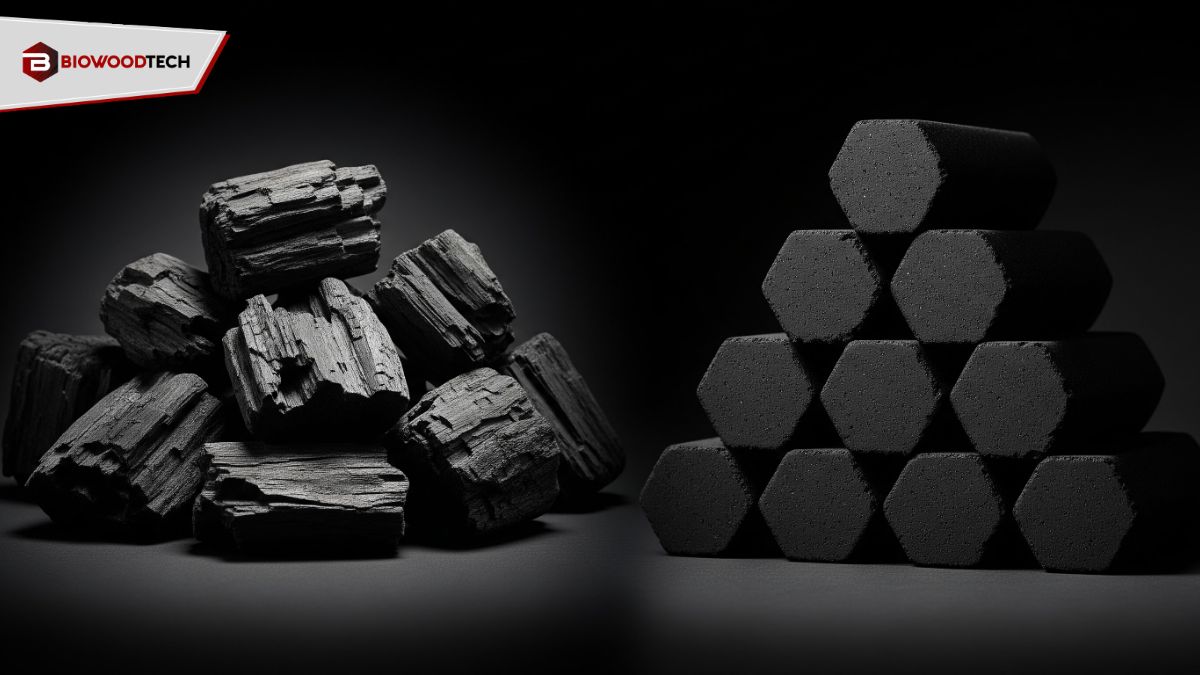
Restaurant-grade charcoal refers to charcoal graded for consistent lump size, lower dust, steadier burn and cleaner handling than typical supermarket bags.
That usually means:
- Larger, more even pieces that light at a similar pace.
- Less fine dust and “crumbs” that clog grates or fly into hoods.
- Reliable heat over a multi-hour service instead of sharp temperature swings.
Bag weight does not decide quality.
You can have excellent or poor charcoal in both 12kg and 20kg bags. What you are comparing here is handling, storage and cost behaviour, not burn chemistry.
Why Do Suppliers Offer 12kg And 20kg Restaurant-Grade Charcoal Bags?
Suppliers use different bag sizes to match how kitchens buy, store and move sawdust charcoal through their grills.
Patterns look like this:
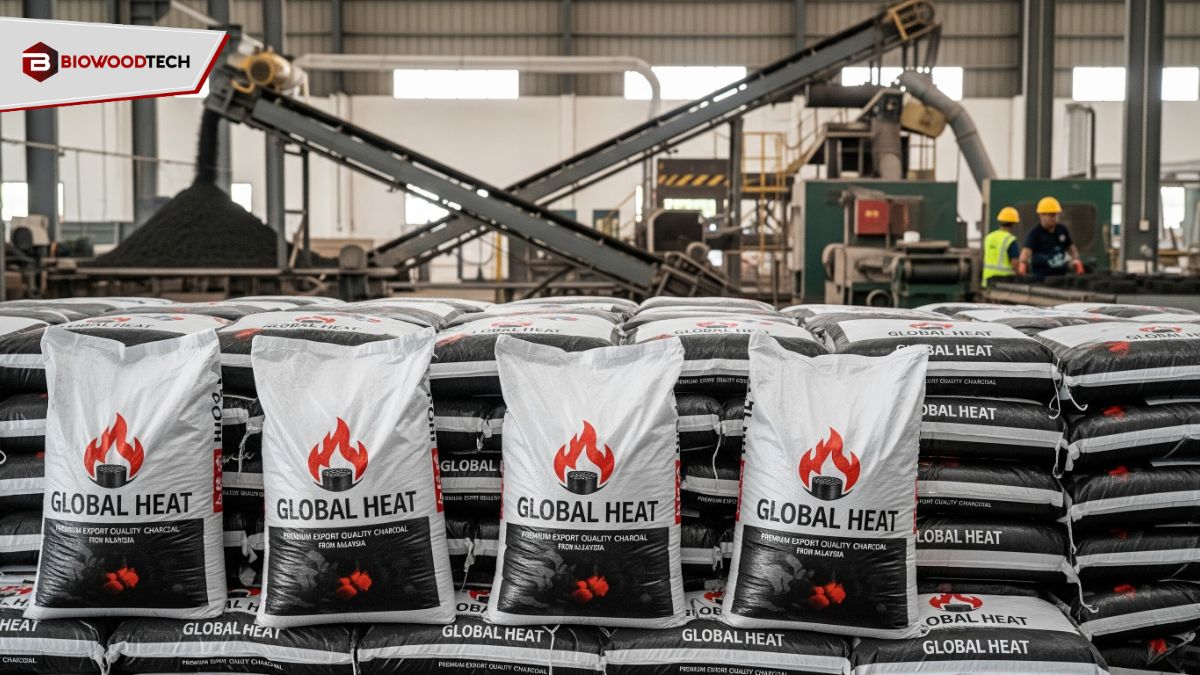
- 12kg bags target restaurants with compact storerooms, narrow stairways and staff who move charcoal manually. One person can carry a bag up a flight of stairs and tip it into a bin without too much strain.
- 20kg bags suit bigger operations that accept heavier bags in exchange for better per-kg pricing and fewer units to count. These kitchens often have pallet storage, trolleys or loading bays.
From the supplier side, 20kg bags reduce packaging per kilogram and make palletised export or bulk distribution more efficient.
From the kitchen side, 12kg bags lower the daily handling friction.
How Do 12kg And 20kg Bags Affect Daily Kitchen Operations?
The impact of bag size shows up in staff fatigue, refill speed, cleanliness and how often you need to move stock around tight corridors.
Most operators do not consider the weight, but it’s pretty important that we get this across.
Before service
- With 12kg bags, a team member can grab one bag per grill, carry it safely and decant it into each pit or holding bin.
- With 20kg bags, they might split a bag between two grills or need a trolley just to move stock from the storeroom to the kitchen.
During service
- 12kg bags are easier to open and top up quickly during bursts of orders.
- 20kg bags are less agile once open. If you do not use a full bag, the remainder often sits exposed to humidity.
After service
- Staff lifting multiple 20kg bags at closing time will feel that weight across a busy week.
- Smaller bags spread the workload and can reduce complaints about back and shoulder pain.
“A useful internal metric is to record how many minutes and people it takes to move charcoal from storage to grills each day.”
If handling time is high, bag size is part of the problem.
Which Restaurant-Grade Charcoal Bag Size Works Better For Smaller Kitchens?
Smaller kitchens, shoplots and semi-indoor stalls usually benefit more from 12kg bags because they fit the physical space and the way staff actually move.
You might recognise some of these conditions:
- Storerooms that double as dry-goods storage, with very limited floor space for fuel.
- Staircases or narrow lanes between back door and grill area.
- Staff who already carry crates, gas cylinders and ingredients through the same path.
In these situations, 12kg bags usually win because:
- They stack better on standard shelving.
- A single person can move them without needing an extra pair of hands.
- You can allocate stock more precisely, for example one bag for the satay grill and one for the yakitori pit, instead of opening a 20kg sack and leaving half exposed.
For smaller operators, a neat row of 12kg bags often gives more control than fewer large bags that are awkward to move and store.
When Does A 20kg Restaurant-Grade Charcoal Bag Make More Sense?
20kg bags make sense for operations that burn a lot of charcoal every day and have the infrastructure to handle heavier loads.
Examples include:
- Kitchens with multiple large charcoal ovens or long open grills running from lunch through supper.
- Outlets with pallet-friendly storerooms, loading bays and staff trained to use trolleys or pallet jacks.
- Central kitchens that re-distribute charcoal to branch outlets.
In these setups, the advantages of 20kg bags are:
- Lower cost per kilogram once you factor in volume and pallet ordering.
- Fewer bags to handle and count, which matters when you are moving dozens of bags a week.
- Simpler ordering patterns, for example “one pallet of 20kg bags every two weeks” instead of frequent small deliveries.
But! Keep in mind, if a 20kg bag sits open for days taking on moisture, any cost advantage disappears through poor burn performance and extra smoke.
In other words, keep the charcoal in a dry and safe location when not in use.
How Should You Decide Between Restaurant-Grade Charcoal 12kg And 20kg?
The most reliable way to decide is to track a few weeks of real usage, handling issues and storage limitations, then match bag size to what you discover.
A simple process looks like this:
- Measure current consumption
Track how many kilograms you burn per service, per grill, across a typical week. - Note handling pain points
Record any complaints about lifting, refilling during peak periods or moving bags through tight spaces. - Review storage and humidity
Look at how many bags you can store off the floor, in covered space, without blocking walkways. - Test a small switch
If you use 20kg now, trial 12kg bags for one month on one grill line, and compare wastage and workload.
If you use 12kg, trial a mix of 12kg and 20kg for base stock and see how ordering and handling change.
You do not have to make a permanent decision immediately. A short controlled test often reveals which option really fits your kitchen, especially when water and steam comes into the fray.
Bag Size is Really Worth Noting When it comes to Charcoal Kitchens
- Smaller bags suit tighter spaces, frequent top ups and teams that move charcoal by hand.
- Larger bags work well for kitchens with predictable volume, pallet storage and proper equipment for moving heavier loads.
Testing both sizes for a few weeks is usually the fastest way to see which one matches your workflow or whether a combination of both gives the best balance.
But if you want consistent burn performance with reliable supply for FnB operations, Biowoodtech can support you with BBQ charcoal that holds up well in Malaysia’s humid kitchen conditions when rice cookers and woks enter the fray.
Talk to us if you would like a sample or need a supply plan that fits your menu, equipment and service schedule!
Frequently Asked Questions About Restaurant Grade Charcoal
Restaurant-grade charcoal is sorted for larger, consistent lumps with less dust and offcuts. It is made to burn steadily for long services, with fewer sparks and cleaner handling than typical supermarket packs.
Track usage over a few weeks. Note how many bags you burn per grill for lunch and dinner. Divide total kilograms by number of services to build your own baseline per shift.
Per kilogram, 20kg bags often cost slightly less, especially when bought in pallet quantities. That saving only holds if you can move, store and use them fast enough without extra wastage.
Bag size does not change burn characteristics. Wood type, density, moisture content and grading control heat, smoke and ash. The same product packed in 12kg and 20kg bags will behave the same in the grill.
Keep bags off the floor on pallets or shelves, away from dripping pipes and leaks. Use older stock first, close opened bags tightly and avoid leaving them near dishwashing steam or open doors during rain. For more smart storage ideas, explore our guide to the 10 Best Place to Store Your Charcoal
Use trolleys for long distances, train staff to lift with bent knees instead of their back and avoid asking one person to throw 20kg bags onto high shelves. If lifting is a recurring issue, shift part of your ordering to 12kg bags.