Key Takeaways
- The best charcoal storage spot is cool, dry, shaded, and sealed, not simply the most convenient corner.
- Humidity control matters more than location, especially during long wet periods.
- Always keep charcoal off concrete floors to avoid moisture transfer.
- Airtight containers plus moisture absorbers outperform bags alone.
- Separating fresh and used charcoal prevents one damp batch from ruining the rest.
The best place to store any high quality charcoal are locations that stay cool, dry, shaded, and well sealed from humidity.
In humid climates, success depends less on the room itself and more on airflow, moisture control, and container quality.
Most charcoal problems begin long before lighting the grill. Poor storage allows moisture absorption, odour contamination, and uneven burning. Given how humid Malaysia can be and the threat of constant flooding, storing your charcoal safely is not as easy as throwing in the storage room.
Hence today, we will rank 10 most practical storage locations and explain how to set each one up properly.
Comparison Table: Best Places to Store Charcoal
| Place | Best For | Why It Works | Moisture Control Setup | Watch-Out |
| Dry storeroom shelf | Most homes | Stable indoor conditions | Airtight bin + silica gel | Damp walls |
| Garage bin (raised) | Larger homes | Shaded and ventilated | Gasket bin + pallet | Concrete floors |
| Pantry cabinet | Small quantities | Cool indoor air | Sealed container only | Food odours |
| Utility area bucket | Occasional use | Easy access | Lidded bucket | Water splashes |
| Covered balcony box | Apartments | Outdoor airflow | Deck box + inner bin | Sun heat |
| Shed on pallets | Bulk storage | Space and separation | Sealed bins + pallets | Roof leaks |
| Grill-side storage box | Frequent grilling | Convenience | Airtight box | Heat exposure |
| Indoor closet | Limited space | Controlled air | Dehumidifier + bin | Poor ventilation |
| Resealed bag + bin | Short-term storage | Reduced air exposure | Clip + outer bin | Bag tears |
| Portioned zip packs | Consistency | Minimal re-exposure | Zip bags + bin | Labelling errors |
1. A Dry Storeroom Shelf (Off the Floor)
One of the most reliable storage locations when the room stays shaded and dry.
A storeroom shelf keeps charcoal away from ground moisture and allows airflow around the container.
Elevation alone significantly reduces damp transfer from floors, especially in enclosed spaces.
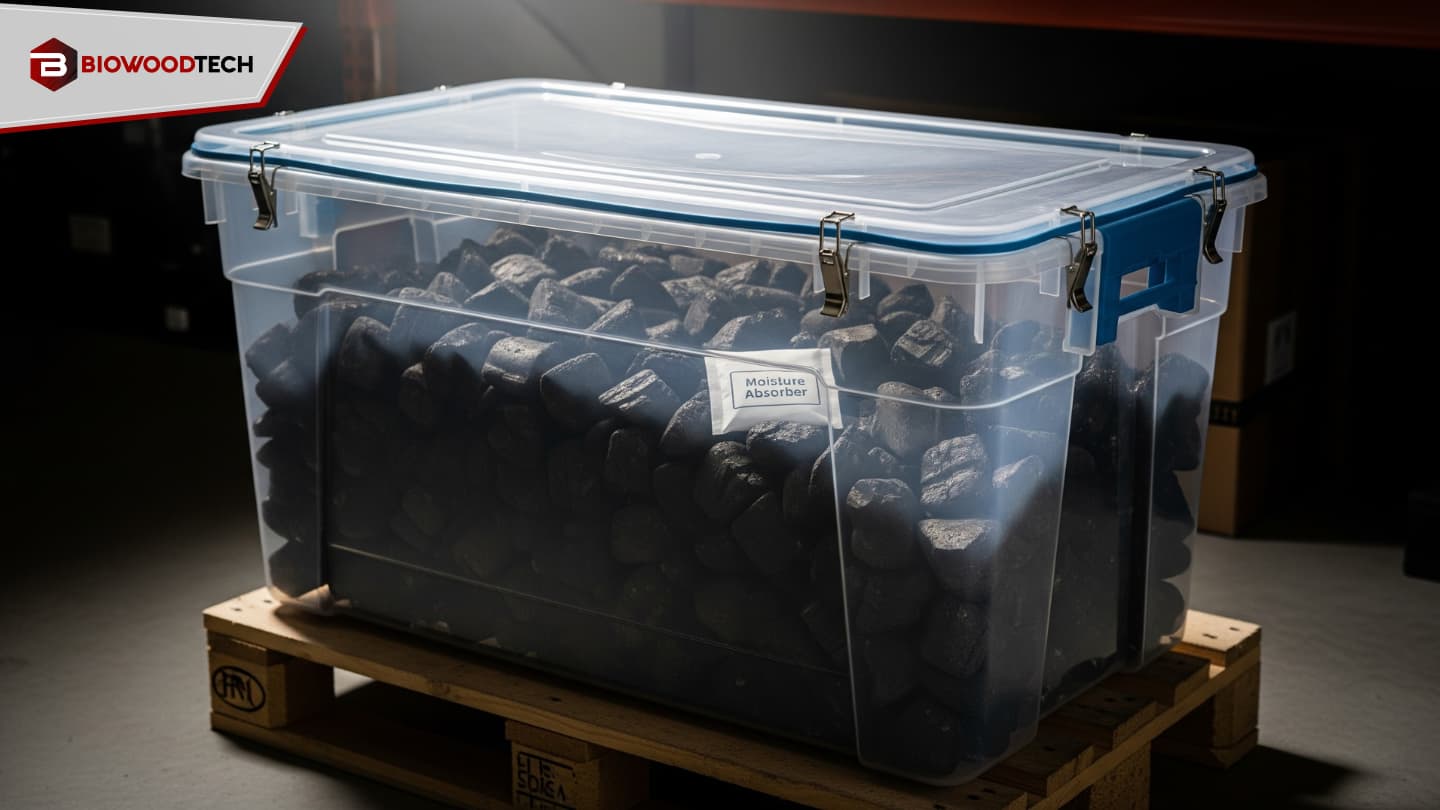
We also recommend using a sealed bin placed at least 15 centimetres above floor level. If the room tends to trap humidity, add silica gel or a reusable moisture absorber and check it monthly during monsoon seasons.
2. A Sealed Airtight Bin in the Garage (Not on Concrete)
Works well when raised and kept away from damp corners.
Garages often feel dry, but concrete floors slowly release moisture, especially after rain. Charcoal stored directly on concrete absorbs this moisture over time, which leads to poor ignition and uneven burning.
Raising the bin breaks this moisture pathway and stabilises the storage environment. The bin itself matters just as much as placement.
Best setup checklist:
- Place the bin on a wooden pallet, metal rack, or shelf
- Use a gasket-sealed, airtight container
- Add silica gel or a moisture absorber inside the bin
- Position it away from water heaters, detergents, paint, or fuel
This option suits homes with garages that are shaded, well ventilated, and not prone to water pooling.
3. A Pantry Cabinet (Only If Odour-Free)
Suitable for small quantities when airflow and cleanliness are controlled.
Charcoal is highly porous, which means it absorbs smells easily. A pantry can work, but only if it stays cool and free from strong food or chemical odours.
This location is best for those who grill occasionally and store limited amounts rather than bulk bags.
Use this option only if:
- The pantry is away from cooking steam
- No strong spices, detergents, or cleaning products are nearby
- Charcoal is stored in a fully airtight container, not just the original bag
If charcoal ever smells unusual before lighting, it has already absorbed odours and should not be used.
4. A Lidded Bucket in a Utility Area
Convenient for occasional use with careful placement.
Utility areas are easy to access but often come with higher humidity and splash risks. Buckets can work when used thoughtfully and positioned correctly.
Thin or flexible plastic is a common problem. When it flexes, air enters, which defeats the purpose of sealing.
How to make this work:
- Use a thick, rigid bucket with a tight-fitting lid
- Raise it off the floor on a small stand or shelf
- Keep it away from washing machines, drains, and mops (away from water sources)
- Avoid frequent opening and closing
This setup works best for small quantities used regularly rather than long-term storage.
5. A Covered Balcony Corner (With Proper Shelter)
Viable for apartments when fully protected from rain and sun.
Balconies are exposed environments, even when covered. Rain, wind-driven moisture, and temperature swings all increase condensation risk.
The important part is layered protection. One container alone is rarely enough outdoors.
Recommended outdoor layering:
- Outer layer: weatherproof deck box or storage chest
- Inner layer: airtight bin or sealed bucket
- Add a moisture absorber inside the inner container
Avoid direct sunlight. Heat during the day followed by cooler nights causes condensation inside sealed containers, which dampens charcoal quickly.
6. A Shed with Raised Storage
Ideal for larger quantities when the structure stays dry.
Sheds offer space but vary widely in quality. Even small roof leaks or wall gaps can introduce moisture over time.
Before committing to this option, assess the shed during or after heavy rain.
Best practices for shed storage:
- Store charcoal on pallets or shelving, never on the floor
- Keep bins away from exterior walls
- Use sealed containers even inside a dry shed
- Check for leaks seasonally, especially before long wet periods
This setup suits those who buy charcoal briquettes in bulk or grill frequently.
7. A Dedicated Charcoal Box Near the Grill
Keeping charcoal near the grill saves time but introduces safety and quality risks. Heat exposure accelerates moisture cycling and increases ignition hazards.
Distance matters more than convenience here.
Safe placement guidelines:
- Keep the container well away from open flames and hot surfaces
- Use a metal or heavy-duty plastic box with a secure lid
- Close the container immediately after removing charcoal
- Never store warm or partially lit charcoal inside
This option works best when combined with disciplined handling habits.
8. A Cool Indoor Closet
Works in compact spaces with humidity control.
Closets can function as storage zones if humidity is actively managed. Problems arise when closets sit against cold exterior walls or lack airflow.
A simple humidity control measure often makes the difference.
To use a closet safely:
- Avoid walls that feel cold or damp
- Use a moisture absorber or compact dehumidifier
- Store charcoal in a sealed bin
- Inspect contents after long rainy spells
This option suits small living spaces where other storage areas are limited.
9. Resealed Original Bag Inside a Secondary Container
Practical for short-term storage after purchase.
Charcoal bags are designed for transport, not long-term storage. Even when folded, they allow slow air exchange.
A secondary container adds a critical moisture barrier.
Short-term protection steps:
- Fold and clip the original bag tightly
- Place it inside a sealed bin or bucket
- Store the bin off the floor
- Check bags for pinholes or wear
This approach works best when charcoal will be used within a few weeks.
10. Portioned Zip Bags Inside an Airtight Container
Repeated exposure to humid air is a major cause of charcoal degradation. Portioning limits how often the main supply is exposed.
This method is especially useful in humid conditions.
Effective portioning workflow:
- Divide charcoal into single-use zip bags
- Store all portions inside one airtight container
- Label portions with dates
- Keep used charcoal separate from fresh stock
While slightly more effort upfront, this setup delivers the most consistent lighting and burn quality.
Which Charcoal Storage Option Fits Your Living Situation?
| Living / Operating Condition | Best Storage Option(s) | Why This Works |
| High-rise apartment (no storeroom) | Covered balcony corner; Portioned zip bags in airtight container | Minimises indoor clutter while controlling humidity and repeated air exposure |
| Apartment with pantry or cabinet space | Pantry cabinet (odour-free); Portioned zip bags | Convenient for small quantities, provided odour and steam are controlled |
| Apartment with utility yard | Lidded bucket in utility area; Airtight bin (raised) | Easy access with acceptable moisture control if raised and sealed |
| Condo with limited space | Indoor closet with moisture control; Portioned zip bags | Works when humidity is managed and containers remain sealed |
| Terrace house with garage | Airtight bin in garage (raised); Dedicated grill-side box | Balances storage capacity, accessibility, and moisture protection |
| Semi-D or bungalow | Shed with raised storage; Garage airtight bin | Suitable for bulk storage with proper elevation and airflow |
| Backyard grilling setup | Dedicated charcoal box near the grill | Fast access for frequent use, provided heat distance is respected |
| Occasional griller (small quantities) | Pantry cabinet; Resealed bag inside secondary container | Reduces setup effort while preventing short-term moisture exposure |
| Frequent griller (weekly use) | Portioned zip bags; Grill-side storage box | Ensures consistent ignition and reduces repeated air contact |
| Restaurants and catering operations | Raised bulk containers in dry storage room | Supports volume control, rotation, and separation from heat and food areas |
Store It Correctly, And May Your Flame Grill Brighter
Effective charcoal storage comes down to three controllable factors:
- Moisture control
- Elevation
- Proper sealing
Good storage also protects the quality of the charcoal itself which is why at Biowoodtech, we produce sawdust charcoal with consistent density and low inherent moisture, which allows it to perform reliably when stored correctly.
When paired with airtight containers and dry placement, our charcoal maintains stable heat output and predictable burn time, even in humid conditions.
Frequently Asked Questions About Place to Store Charcoal
An airtight bin with a gasket seal works best. Pair it with a moisture absorber and keep it elevated off the floor.
Yes, if fully sheltered and sealed. Outdoor heat and rain exposure increase condensation risk inside containers.
Concrete holds moisture that transfers into containers, making charcoal harder to light and burn evenly.
It is safe when stored away from heat sources in a sealed container and kept dry.
When sealed and kept dry, charcoal can last for years without losing performance.
Slightly damp charcoal may recover if dried in a shaded, ventilated area. Charcoal with mould or strong odours should be replaced.